

Hey there! I'm a supplier of Plastic Toy Mould. Inspecting a plastic toy mould for quality is super important. It can make or break the final toy products. In this blog, I'll share some tips on how to do a proper quality inspection of plastic toy moulds.
Visual Inspection
The first step in inspecting a plastic toy mould is a good old - fashioned visual check. Start by looking at the overall appearance of the mould. Check for any obvious signs of damage, like cracks, scratches, or dents. These flaws can affect the shape and quality of the toys produced.
For example, a crack in the mould can cause the plastic to seep out during the injection process, resulting in a toy with uneven edges or extra plastic bits. Scratches on the mould surface can leave marks on the toys, making them look unappealing.
Pay close attention to the details. Look at the fine features of the mould, such as small protrusions or indentations that are meant to create specific parts of the toy. Make sure these features are sharp and well - defined. If they're worn down or misshapen, the toys won't have the right look.
Dimensional Inspection
Dimensional accuracy is crucial when it comes to plastic toy moulds. Toys need to be the right size and shape to meet safety standards and consumer expectations. Use precision measuring tools like calipers, micrometers, and height gauges to measure the key dimensions of the mould.
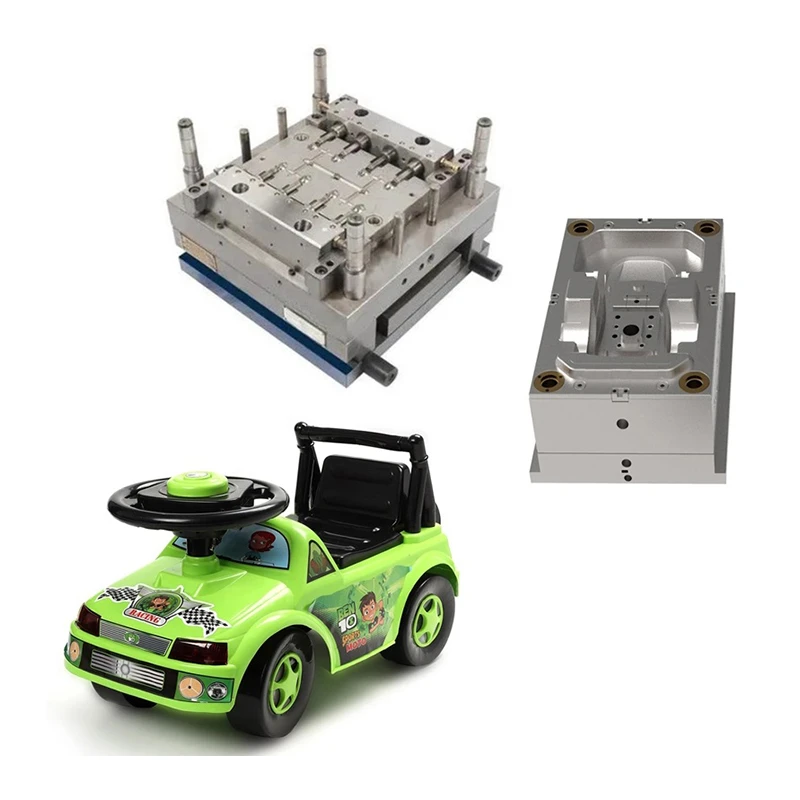

Measure the length, width, and height of the main body of the mould, as well as the dimensions of any cavities or inserts. Compare these measurements with the design specifications. Even a small deviation can lead to problems. For instance, if a toy car mould is slightly too small, the wheels might not fit properly, and the car won't roll smoothly.
It's also important to check the parallelism and perpendicularity of different parts of the mould. If the mould halves aren't parallel, it can cause uneven filling of the plastic and result in toys with inconsistent thickness.
Surface Finish Inspection
The surface finish of the mould has a direct impact on the appearance of the toys. A smooth surface finish will result in toys that look shiny and professional, while a rough surface can make the toys look cheap.
Use a surface roughness tester to measure the surface roughness of the mould. The acceptable surface roughness will depend on the type of toy and the desired finish. For example, a toy that's meant to have a glossy finish will require a smoother surface on the mould.
Inspect the surface for any pits, pores, or unevenness. These imperfections can transfer to the toys and make them look flawed. In some cases, you might need to polish the mould to achieve the desired surface finish.
Material Inspection
The material used to make the plastic toy mould is another important factor. Different materials have different properties, such as hardness, wear resistance, and thermal conductivity.
Check the material certificate to ensure that the mould is made from the specified material. For example, if the design calls for a high - strength steel, make sure the mould is actually made from that type of steel.
Inspect the material for any signs of corrosion or contamination. Corrosion can weaken the mould and reduce its lifespan, while contamination can affect the quality of the plastic toys.
Functionality Inspection
After the visual, dimensional, surface finish, and material inspections, it's time to test the functionality of the mould. This involves running a test injection to see how the mould performs.
Set up the injection molding machine with the appropriate plastic material and processing parameters. Start the injection process and observe how the plastic fills the mould. Make sure there are no air bubbles, short shots (where the plastic doesn't fill the entire cavity), or other filling issues.
Check the ejection system of the mould. The toys should be able to eject smoothly without getting stuck in the mould. If the ejection is difficult, it can damage the toys or the mould itself.
Inspect the parting line of the mould. The parting line is where the two halves of the mould meet. It should be clean and even, with no flash (extra plastic) on the toys.
Safety Inspection
Safety is always a top priority, especially when it comes to plastic toys. Inspect the mould to ensure that it meets all relevant safety standards.
Check for any sharp edges or corners on the mould that could potentially cause injury during the manufacturing process. Make sure that the mould is designed in such a way that it won't produce toys with small parts that could be a choking hazard for children.
For example, if you're making Child Safety Seat Mold, it's essential to ensure that the mould is designed to produce seats that meet strict safety regulations.
Long - term Durability Inspection
A good plastic toy mould should be able to withstand repeated use over a long period. To assess its long - term durability, look at factors like the hardness of the material and the quality of the heat treatment.
A harder material will be more resistant to wear and tear. Check if the mould has been properly heat - treated to improve its hardness and strength. This can help prevent the mould from deforming or wearing out too quickly.
Also, consider the maintenance requirements of the mould. A well - designed mould should be easy to clean and maintain, which will extend its lifespan.
Documentation and Traceability
Keep detailed records of the inspection process. This includes the inspection results, any measurements taken, and any issues found. Documentation is important for quality control and for providing evidence of compliance with standards.
Make sure that the mould has proper traceability. This means that you can track the origin of the material, the manufacturing process, and any previous inspections. Traceability helps in case there are any quality issues down the line.
Conclusion
Inspecting a plastic toy mould for quality is a comprehensive process that involves multiple steps. From visual checks to functionality tests, each step is crucial in ensuring that the mould produces high - quality plastic toys.
If you're in the market for Plastic Toy Mould or Children Electrical Car Mould, and you want to ensure top - notch quality, don't hesitate to reach out. We're here to provide you with the best moulds and the expertise to back them up. Let's start a conversation and see how we can meet your needs!
References
- Injection Molding Handbook by O. Olszewski
- Plastics Materials by J. A. Brydson