

Picking the right washing machine mould for your product can feel like navigating a maze. But don't worry, I've been in the Washing Machine Mould supply game for a while, and I'm here to share some tips that'll make this process a whole lot easier.
Understand Your Product Requirements
First things first, you need to have a crystal - clear understanding of what your washing machine product is all about. What's the size of the washing machine? Is it a compact model for small apartments or a large - capacity one for big families? The size will directly impact the dimensions of the mould you need.
Think about the design of your washing machine. Does it have a sleek, modern look with smooth curves, or is it more of a traditional, boxy style? Complex designs with intricate details will require more sophisticated moulds. For instance, if your washing machine has unique patterns or textures on the exterior, the mould must be able to replicate those precisely.
Also, consider the material that you'll be using for your washing machine parts. Most washing machine components are made of plastic, but there are different types of plastics with varying properties. Some plastics are more durable, while others are more flexible. The type of plastic you choose will affect the type of mould. For example, if you're using a high - temperature - resistant plastic, the mould needs to be able to withstand the heat during the injection - molding process.
Evaluate the Mould Quality
Quality is non - negotiable when it comes to washing machine moulds. A high - quality mould will last longer, produce consistent results, and ultimately save you money in the long run.
Look at the material of the mould itself. High - grade steel is often the best choice for washing machine moulds. It's strong, resistant to wear and tear, and can handle the high pressures and temperatures involved in the injection - molding process. Cheaper materials might seem like a good deal upfront, but they'll likely break down faster, leading to more frequent replacements.
Check the precision of the mould. The dimensions of the mould should match your product requirements exactly. Any slight deviation can result in parts that don't fit together properly or have an uneven finish. A well - made mould will have smooth surfaces and sharp edges, which will ensure that the final product looks and functions as intended.
Another aspect of quality is the surface finish of the mould. A good surface finish will prevent the plastic from sticking to the mould during the injection - molding process. This not only makes the production process more efficient but also improves the appearance of the final product.
Consider the Mould Manufacturer
The manufacturer of the washing machine mould plays a crucial role in the quality and performance of the mould. You want to work with a manufacturer that has a good reputation in the industry.
Look for a manufacturer with experience in producing washing machine moulds. An experienced manufacturer will have a better understanding of the specific requirements of washing machine parts and will be able to offer more customized solutions. They'll also have a track record of producing high - quality moulds, which you can verify through customer reviews and testimonials.
Check the manufacturer's production capabilities. Do they have the latest equipment and technology? A manufacturer with advanced machinery will be able to produce moulds with higher precision and efficiency. They'll also be able to handle large - scale production if you have high - volume orders.
Customer service is also important. A good manufacturer will be responsive to your inquiries, provide timely updates on the production process, and offer after - sales support. If you run into any issues with the mould after purchase, you want to be able to get help quickly.
Look at the Cost
Cost is always a factor when making any business decision. But remember, the cheapest option isn't always the best. You need to find a balance between cost and quality.
Get quotes from multiple mould suppliers. This will give you an idea of the market price and help you identify any unusually high or low prices. When comparing quotes, make sure you're comparing apples to apples. Consider the quality of the mould, the materials used, the production time, and any additional services offered.
Some suppliers might offer lower prices but cut corners on quality. Others might charge a premium for their brand name or additional features. Don't be afraid to negotiate with the suppliers. You might be able to get a better deal, especially if you're placing a large order.

Think About the Production Volume
Your expected production volume will also influence your choice of washing machine mould. If you're planning to produce a small number of washing machines, say a few hundred units, you might be able to get away with a less expensive, simpler mould. However, if you're aiming for high - volume production, you'll need a more robust and durable mould.
For high - volume production, you'll also want to consider the cycle time of the mould. The cycle time is the time it takes to produce one part using the mould. A shorter cycle time means you can produce more parts in less time, increasing your overall production efficiency. Some advanced moulds are designed to have shorter cycle times, which can be a significant advantage for large - scale production.
Explore Different Types of Moulds
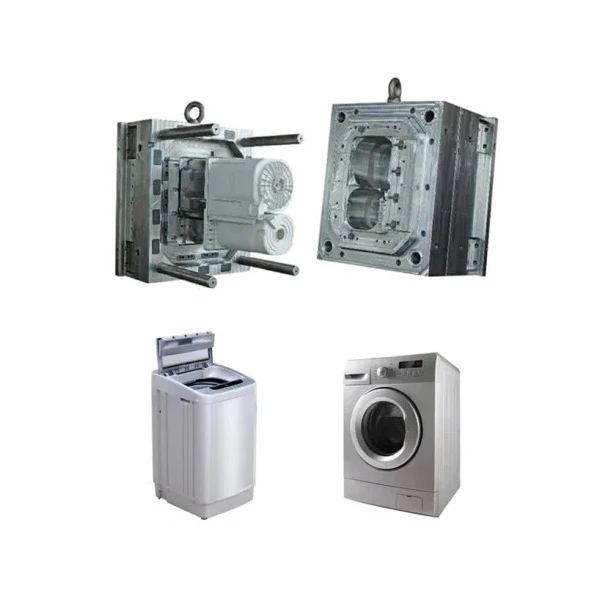
There are different types of washing machine moulds available in the market. Two common types are the Washing Machine Injection Mould and the Washing Machine Plastic Injection Mold.
Injection moulds are widely used in the production of washing machine parts. They work by injecting molten plastic into a mould cavity under high pressure. This method allows for the production of complex shapes with high precision. Injection moulds can be customized to produce different parts of the washing machine, such as the outer casing, the control panel, and the drum.
Plastic injection molds, as the name suggests, are specifically designed for plastic parts. They're suitable for a variety of plastic materials and can produce parts with different finishes and properties. If you're mainly using plastic for your washing machine components, a Plastic Washing Machine Mould might be the right choice for you.
Seek Expert Advice
If you're still unsure about which washing machine mould to choose, don't hesitate to seek expert advice. You can consult with industry professionals, such as engineers or other washing machine manufacturers who have experience in the field. They can offer valuable insights based on their own experiences and help you make a more informed decision.
You can also reach out to us, as a Washing Machine Mould supplier. We've helped numerous customers choose the right moulds for their products, and we're more than happy to share our knowledge and expertise with you.
In conclusion, choosing the right washing machine mould for your product requires careful consideration of your product requirements, the mould quality, the manufacturer, the cost, the production volume, and the type of mould. By following these tips, you'll be well on your way to finding a mould that meets your needs and helps you produce high - quality washing machines.
If you're interested in purchasing a washing machine mould or have any questions about the selection process, feel free to get in touch with us. We're here to assist you every step of the way and ensure that you get the best possible mould for your product.
References
- General knowledge from years of experience in the Washing Machine Mould supply industry.
- Industry reports on washing machine manufacturing and mould technology.