

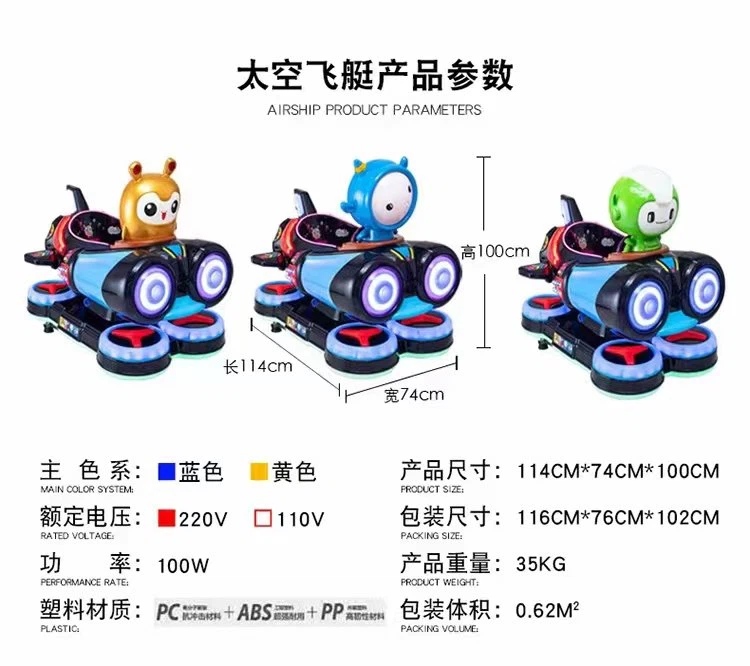
As a supplier of Airship Products, I've delved deep into the intricate relationship between our offerings and air traffic control. In this blog, I'll explore how our Airship Product link to "Airship Product" navigates the complex web of air traffic control regulations and systems.
Understanding Air Traffic Control
Before we discuss how our Airship Product interacts with air traffic control, it's crucial to understand what air traffic control is. Air traffic control (ATC) is a service provided by ground - based controllers who direct aircraft on the ground and through controlled airspace. Their primary goals are to prevent collisions, organize and expedite the flow of air traffic, and provide information and other support for pilots.

ATC operates in different zones, including the terminal control area (TCA) around airports, en - route airspace, and oceanic airspace. Each zone has its own set of rules and procedures. For example, in the TCA, controllers are responsible for guiding aircraft during takeoff, landing, and the immediate vicinity of the airport. In en - route airspace, they ensure safe separation between aircraft traveling long - distances.
How Our Airship Product Fits into the Air Traffic Ecosystem
Our Airship Product is designed with safety and compliance in mind. We understand that it must operate within the framework of air traffic control regulations. One of the key features of our airship is its advanced navigation and communication systems. These systems are built to interface seamlessly with existing air traffic control infrastructure.
The navigation system on our airship is equipped with GPS technology, which allows it to accurately determine its position in real - time. This information can be shared with air traffic control centers, enabling controllers to track the airship's movement precisely. The GPS also helps the airship follow pre - planned routes, which are often approved by air traffic control in advance.
In terms of communication, our airship is fitted with VHF (Very High Frequency) radios. These radios are the standard means of communication between aircraft and air traffic control. Pilots on our airship can use these radios to receive instructions from controllers, report their position, and request clearances. For instance, when approaching a controlled airspace, the pilot can use the VHF radio to contact the relevant air traffic control center, state their intentions, and await approval to enter.
Challenges and Solutions
One of the challenges our Airship Product may face is the relatively slow speed compared to traditional aircraft. This can cause difficulties in maintaining the standard separation distances required by air traffic control. To address this issue, we have developed a unique traffic management algorithm. This algorithm takes into account the airship's speed, direction, and the positions of other nearby aircraft. It then calculates the optimal path for the airship to follow, ensuring that it maintains a safe distance from other air traffic while still reaching its destination efficiently.
Another challenge is the airship's vulnerability to weather conditions. Strong winds, thunderstorms, and other adverse weather can affect its flight path and performance. Our airship is equipped with weather monitoring systems that can detect approaching weather fronts. When such conditions are detected, the airship can either adjust its route or altitude under the guidance of air traffic control. For example, if a thunderstorm is detected ahead, the airship can request a deviation from its original route to avoid the dangerous weather area.
Integration with Future Air Traffic Control Systems
The future of air traffic control is moving towards more automated and data - driven systems. Concepts such as unmanned traffic management (UTM) are being developed to handle the increasing number of unmanned aerial vehicles (UAVs) in the sky. Our Airship Product is being designed to integrate with these future systems.
We are exploring the use of data - sharing platforms that can exchange information between our airship, other aircraft, and air traffic control centers in real - time. This will enable more efficient traffic management and better decision - making. For example, if a large number of UAVs are operating in a particular area, the data - sharing platform can alert our airship's pilot and suggest alternative routes to avoid congestion.
Safety and Redundancy
Safety is our top priority when it comes to our Airship Product. To ensure safe operation within the air traffic control system, we have built in multiple levels of redundancy. The navigation and communication systems on the airship have backup components. In case of a primary system failure, the backup systems can take over, allowing the airship to continue communicating with air traffic control and maintaining its position accurately.
We also conduct regular safety audits and maintenance checks on our airships. These checks ensure that all systems are in proper working order and comply with air traffic control requirements. By adhering to strict safety standards, we can minimize the risk of accidents and ensure the smooth integration of our airships into the air traffic network.
Benefits for Air Traffic Control
Our Airship Product also offers several benefits for air traffic control. Its slow - speed and relatively quiet operation make it an ideal candidate for certain types of missions, such as surveillance and monitoring. For example, an airship can be used to monitor large areas of land or sea for extended periods without causing significant interference to other air traffic. This can free up traditional aircraft for more time - sensitive missions.
In addition, the data - sharing capabilities of our airship can provide air traffic control with more comprehensive information about the airspace. This can help controllers make more informed decisions, improve traffic flow, and enhance overall safety in the sky.
Comparing with Other Toys in the Market
In the market of children's toys, we also have other interesting products like the link to "Rocking Car" and the link to "Galaxy Fighter". While these toys are designed for entertainment, our Airship Product stands out with its focus on real - world air traffic integration and safety features. The rocking car is a classic toy that provides simple fun for kids, but it doesn't have the technological complexity and safety considerations of our airship. The Galaxy Fighter is a more high - energy toy, but again, it lacks the practical application in the air traffic domain that our Airship Product offers.
Conclusion and Call to Action
In conclusion, our Airship Product is designed to operate safely and efficiently within the air traffic control system. Through advanced navigation and communication systems, innovative solutions to challenges, and a focus on future integration, we ensure that our airship can coexist with other air traffic while providing unique benefits.
If you are interested in our Airship Product or have any questions about how it interacts with air traffic control, we invite you to reach out for a procurement discussion. We are eager to share more details about our product and work with you to meet your specific needs.
References
- International Civil Aviation Organization (ICAO). "Annex 11 - Air Traffic Services."
- Federal Aviation Administration (FAA). "Air Traffic Control Handbook."
- Various research papers on air traffic management and unmanned aerial vehicle integration.