

Hey there! As a supplier of Plastic Spool Moulds, I often get asked a bunch of questions from customers. One question that pops up quite a bit is, "Can a plastic spool mould be used for spools with a large aspect ratio?" Well, let's dig into this topic and find out.
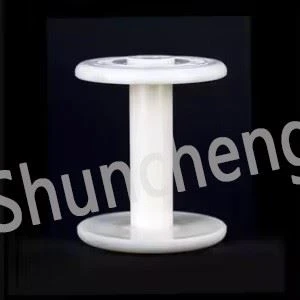
First off, let's talk about what an aspect ratio is. In simple terms, the aspect ratio of a spool is the ratio of its length to its diameter. When we say a spool has a large aspect ratio, it means the spool is relatively long compared to its diameter. These types of spools are commonly used in various industries, like the cable and wire industry, where they're used to wind long lengths of cable or wire.
Now, the big question is whether our plastic spool moulds can handle these high - aspect - ratio spools. The short answer is, it depends. There are several factors we need to consider.
Design Considerations
One of the most important things is the design of the mould itself. For spools with a large aspect ratio, the mould needs to be designed to ensure proper filling of the plastic material. If the mould isn't designed correctly, the plastic might not flow evenly throughout the spool cavity. This can lead to issues like air pockets, incomplete filling, or uneven wall thickness.
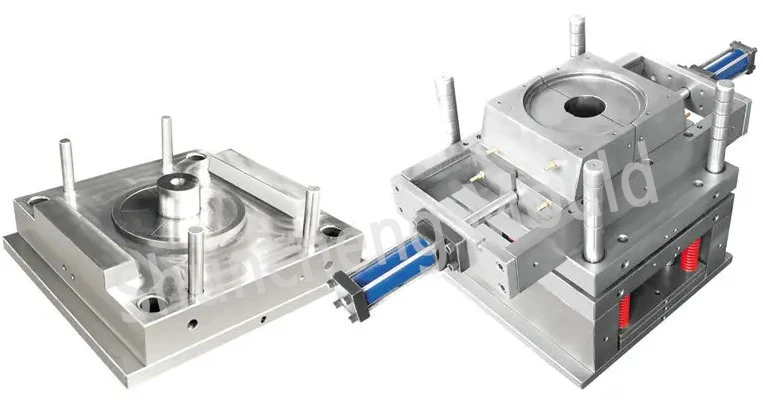
We've put a lot of effort into optimizing the design of our Injection Plastic Spool Bobbin Mould. Our team of designers uses advanced software to simulate the plastic flow during the injection process. This helps us identify any potential problems early on and make the necessary adjustments to the mould design. For example, we might add additional gates or runners to ensure that the plastic can reach all parts of the spool cavity smoothly.
Material Selection
The type of plastic material used also plays a crucial role. Different plastics have different flow properties. For spools with a large aspect ratio, we need to choose a plastic that has good flow characteristics. Otherwise, it'll be really difficult to fill the long and narrow cavities of the spool.
We usually recommend using high - flow plastics for these types of spools. These plastics can flow more easily through the mould, reducing the risk of filling issues. Additionally, we consider other properties of the plastic, such as its strength, durability, and chemical resistance. After all, the spools need to be able to withstand the stresses of winding and unwinding the cable or wire.
Manufacturing Process
The manufacturing process of the spool is another key factor. The injection molding process needs to be carefully controlled to ensure the quality of the spools. For spools with a large aspect ratio, we need to pay special attention to the injection speed, pressure, and temperature.
If the injection speed is too slow, the plastic might start to cool before it reaches the end of the spool cavity, resulting in incomplete filling. On the other hand, if the injection speed is too fast, it can cause turbulence in the plastic flow, leading to air entrapment. We've fine - tuned our manufacturing process over the years to find the optimal settings for producing high - quality spools with large aspect ratios.
Cooling System
A proper cooling system is essential for the production of spools with a large aspect ratio. Since these spools are relatively long, they take longer to cool down compared to spools with a smaller aspect ratio. If the cooling isn't uniform, it can cause warping or shrinkage of the spool.
Our Cable Spool Plastic Injection Mold is equipped with an advanced cooling system. We use a network of cooling channels strategically placed within the mould to ensure that the plastic cools evenly. This helps to maintain the dimensional accuracy of the spool and reduces the risk of defects.
Advantages of Using Our Moulds for High - Aspect - Ratio Spools
If you choose our plastic spool moulds for spools with a large aspect ratio, you'll get several benefits. First of all, our moulds are made with high - quality materials and precision manufacturing techniques. This means you'll get consistent, high - quality spools every time.
Secondly, our team of experts is always available to provide technical support. Whether you have questions about the mould design, material selection, or the manufacturing process, we're here to help. We can work with you to customize the mould to meet your specific requirements.
Another advantage is our cost - effectiveness. We understand that in today's competitive market, cost is a major concern. That's why we've optimized our production process to keep the costs down without compromising on the quality of the moulds.
Case Studies
Let me share a couple of case studies to give you a better idea of how our moulds perform for spools with a large aspect ratio.
One of our customers in the cable industry needed to produce spools with a very high aspect ratio for their new cable product. They were facing issues with incomplete filling and uneven wall thickness with their previous moulds. After switching to our Plastic Bobbin Coil Mold, they saw a significant improvement in the quality of the spools. The spools were now being produced with consistent wall thickness and no air pockets. This not only improved the performance of their cable winding process but also reduced the number of defective spools, saving them a lot of money in the long run.
Conclusion
So, to answer the question, yes, our plastic spool moulds can be used for spools with a large aspect ratio. However, it requires careful consideration of the design, material selection, manufacturing process, and cooling system.
We've got the expertise and the technology to produce high - quality moulds that can meet the challenges of producing spools with large aspect ratios. If you're in the market for plastic spool moulds and have specific requirements for spools with high aspect ratios, don't hesitate to get in touch. We can have a detailed discussion about your needs and provide you with a customized solution.
References
- "Injection Molding Handbook" by O. Olajide
- "Plastic Materials and Their Properties" by P. F. Bruins