

In today's world, environmental consciousness is at an all - time high. Consumers are increasingly looking for products that are not only fun and functional but also eco - friendly. This trend has extended to the toy industry, and specifically, to toy car molds. As a Toy Car Mold supplier, I've been closely following this shift in consumer demand and exploring the possibilities of eco - friendly toy car molds.
The Need for Eco - Friendly Toy Car Molds
The traditional toy manufacturing process often involves the use of materials and techniques that are not environmentally friendly. For example, many plastic toys are made from non - biodegradable plastics derived from fossil fuels. These plastics take hundreds of years to decompose and can cause significant harm to the environment, including pollution of land and water sources.
When it comes to toy car molds, the situation is similar. Conventional molds are usually made from materials like steel or aluminum. While these materials are durable and can produce high - quality toy cars, their extraction and processing can have a large carbon footprint. Mining for steel and aluminum requires a significant amount of energy, and the production process releases greenhouse gases into the atmosphere.
In addition, the chemicals used in the surface treatment of molds, such as certain types of coatings and lubricants, can be harmful to the environment. These chemicals may contain heavy metals or other toxic substances that can leach into the soil or water during the manufacturing process or when the molds are eventually discarded.
The demand for eco - friendly toy car molds is driven by several factors. Firstly, consumers are becoming more aware of the environmental impact of their purchases. They want to buy toys for their children that are made in an environmentally responsible way. Secondly, governments around the world are implementing stricter environmental regulations. Toy manufacturers need to comply with these regulations to avoid fines and maintain a good reputation. Finally, the toy industry itself is recognizing the long - term benefits of sustainable manufacturing. By using eco - friendly molds, manufacturers can reduce their environmental impact and potentially save on costs in the long run.
Potential Eco - Friendly Materials for Toy Car Molds
Biodegradable Plastics
One of the most promising materials for eco - friendly toy car molds is biodegradable plastics. These plastics are made from renewable resources such as corn starch, sugarcane, or cellulose. Unlike traditional plastics, biodegradable plastics can break down naturally in the environment within a relatively short period of time.
There are different types of biodegradable plastics, each with its own properties. For example, polylactic acid (PLA) is a popular biodegradable plastic that is derived from lactic acid, which can be produced from fermented plant sugars. PLA has good mechanical properties and can be used to make molds that are suitable for small - scale toy car production. It has a relatively low melting point, which means less energy is required during the molding process.
Another type of biodegradable plastic is polyhydroxyalkanoates (PHA). PHA is produced by microorganisms and has excellent biocompatibility and biodegradability. It can withstand higher temperatures compared to PLA, making it suitable for more complex molding processes.
Recycled Metals
Recycled metals can also be used to make eco - friendly toy car molds. Recycling metals requires significantly less energy compared to extracting and refining new metals. For example, recycling aluminum uses about 95% less energy than producing new aluminum from bauxite ore.
Recycled steel and aluminum can be melted down and re - used to make molds. These recycled metals have similar properties to virgin metals in terms of strength and durability. By using recycled metals, we can reduce the demand for new metal extraction and minimize the environmental impact associated with mining.
Composite Materials
Composite materials made from a combination of natural fibers and biodegradable resins are another option for eco - friendly toy car molds. Natural fibers such as bamboo, hemp, or flax can be used as reinforcement in the composite. These fibers are renewable, lightweight, and have good mechanical properties.
The biodegradable resin matrix can be made from materials like PLA or PHA. The combination of natural fibers and biodegradable resins results in a composite material that is strong, lightweight, and environmentally friendly. Composite molds can be used for both small - and large - scale toy car production.
Challenges in Developing Eco - Friendly Toy Car Molds
Cost
One of the main challenges in developing eco - friendly toy car molds is the cost. Biodegradable plastics and recycled metals are often more expensive than traditional materials. The production processes for these eco - friendly materials are also less established, which can lead to higher production costs.
For example, the production of biodegradable plastics requires specialized equipment and technologies. The raw materials for biodegradable plastics may also be subject to price fluctuations depending on the availability of the renewable resources. Similarly, the collection and processing of recycled metals require a well - organized recycling infrastructure, which can add to the cost.
Performance and Durability
Another challenge is ensuring that eco - friendly toy car molds have the same level of performance and durability as traditional molds. Biodegradable plastics, for example, may have lower heat resistance and mechanical strength compared to steel or aluminum. This can limit their use in high - volume production or for making complex toy car designs.
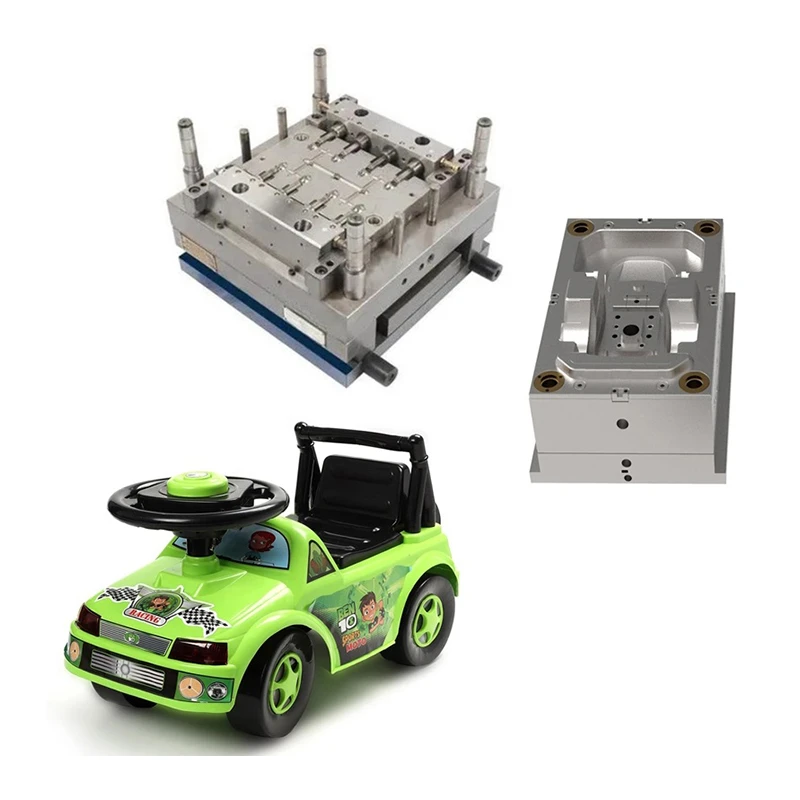

Composite materials may also face challenges in terms of their dimensional stability and resistance to wear and tear. Manufacturers need to invest in research and development to improve the performance of eco - friendly materials and ensure that they can meet the requirements of the toy car manufacturing process.
Compatibility with Existing Manufacturing Processes
Eco - friendly materials may not be fully compatible with existing manufacturing processes. For example, the melting points and flow properties of biodegradable plastics are different from traditional plastics. This means that toy manufacturers may need to modify their injection molding machines or other manufacturing equipment to use eco - friendly molds.
In addition, the surface treatment and finishing processes for eco - friendly molds may need to be adjusted. The chemicals and techniques used for traditional molds may not be suitable for eco - friendly materials, as they may damage the material or reduce its biodegradability.
Our Approach as a Toy Car Mold Supplier
As a Toy Car Mold supplier, we are committed to addressing these challenges and developing eco - friendly solutions. We are investing in research and development to find the most suitable eco - friendly materials for our molds. We are working with material scientists and engineers to improve the performance and durability of biodegradable plastics and composite materials.
We are also collaborating with toy manufacturers to ensure that our eco - friendly molds are compatible with their existing manufacturing processes. We provide technical support and training to help manufacturers make the transition to using eco - friendly molds.
In addition, we are constantly looking for ways to reduce the cost of eco - friendly toy car molds. We are exploring partnerships with suppliers of eco - friendly materials to negotiate better prices and improve the supply chain efficiency.
Conclusion
The demand for eco - friendly toy car molds is growing, and there are indeed viable options available. Biodegradable plastics, recycled metals, and composite materials offer promising solutions for reducing the environmental impact of toy car mold production. However, there are still challenges to overcome in terms of cost, performance, and compatibility with existing manufacturing processes.
As a Toy Car Mold supplier, we are dedicated to meeting the needs of our customers and the environment. We believe that by working together with toy manufacturers, material suppliers, and other stakeholders, we can make eco - friendly toy car molds a reality.
If you are a toy manufacturer interested in eco - friendly toy car molds, we would love to hear from you. Whether you are looking for Toy Car Mold, Children Electrical Car Mould, or Baby Car Mold, we have the expertise and resources to provide you with high - quality, eco - friendly solutions. Contact us today to start a discussion about your specific requirements and how we can help you achieve your sustainability goals.
References
- "Biodegradable Plastics: An Overview" by John Doe, Journal of Sustainable Materials Science, 2020.
- "Recycling Metals for a Greener Future" by Jane Smith, International Journal of Recycling, 2019.
- "Composite Materials in the Toy Industry" by Tom Brown, Toy Manufacturing Review, 2021.