

Injection Molding Cycle
What is the injection molding cycle? The time required to complete an injection molding process is called the molding cycle, also known as the molding cycle. Today, Fusan has sorted out relevant information to introduce the injection molding cycle to you. Let's take a look.
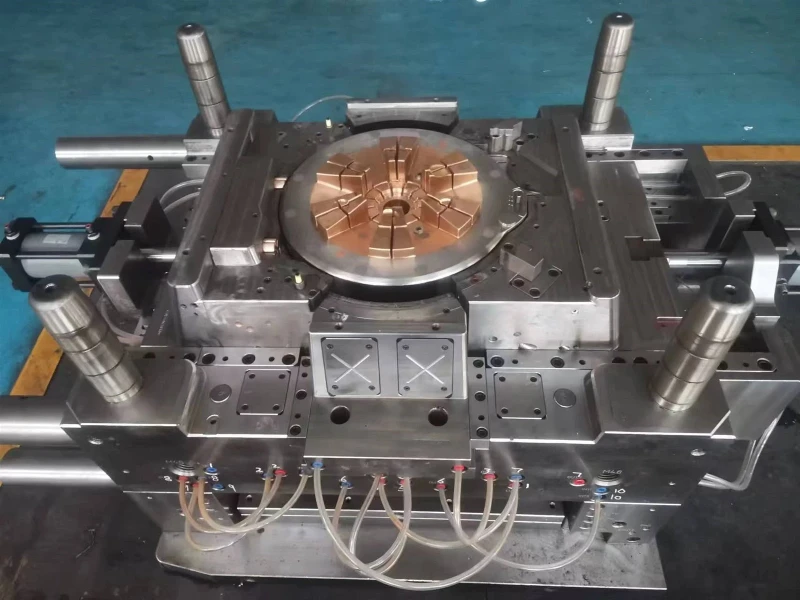
Molding cycle: The molding cycle directly affects labor productivity and equipment utilization. Therefore, in the production process, the relevant time in the molding cycle should be shortened as much as possible under the premise of ensuring quality. In the entire molding cycle, the injection time and cooling time are very important, and they have a great impact on the quality of the product. The filling time in the injection time is proportional to the filling rate, and the filling time in production is generally around 3-5 seconds.
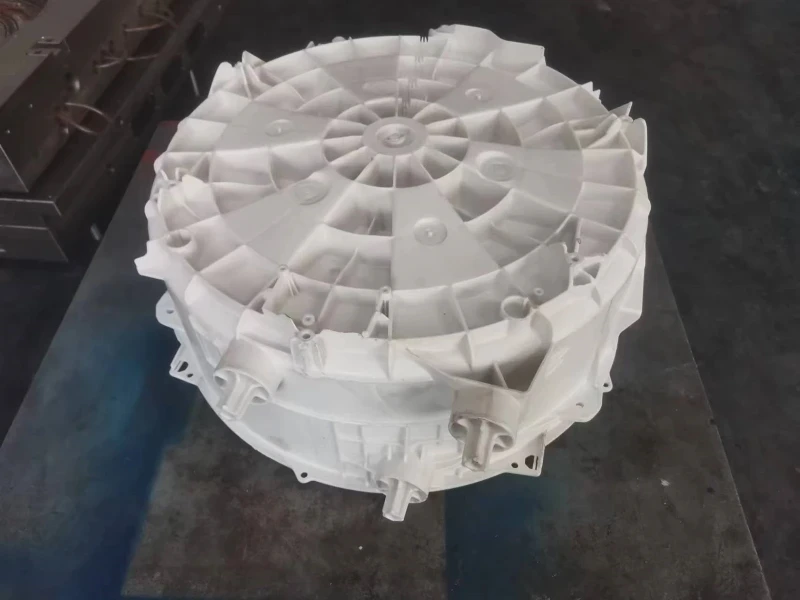
We will introduce you to the injection molding cycle
The holding time in the injection time is the pressurization time of the plastic in the cavity, which accounts for a large part of the entire injection time, generally around 20-120 seconds (up to 5-10 minutes for super thick parts). Before the molten material at the gate freezes, the length of the holding time has an impact on the dimensional accuracy of the product. If it is later, there is no effect. The holding time is also valuable. As we all know, it depends on the material temperature, mold temperature, and the size of the gate and gate.
If the gate and gate dimensions and process conditions are normal, the pressure value with the smallest fluctuation range of product shrinkage is usually used as the standard. The cooling time mainly depends on the thickness of the product, the thermal and crystallization properties of the plastic, and the mold temperature. The end of the cooling time should be based on the principle of ensuring that the product does not change when demolding. The cooling time is generally between 30 and 120 seconds. The cooling time should not be too long, which not only reduces production efficiency, but also affects complex parts. Demolding is difficult, and demolding stress may even be generated when forced demolding. The other time in the molding cycle is related to whether the production process is continuously automated and the degree of continuous automation.