

What is the weight of a front bumper mould?
As a supplier of Front Bumper Moulds, I often receive inquiries from clients about various aspects of these moulds, and one question that comes up quite frequently is about the weight of a front bumper mould. Understanding the weight of a front bumper mould is crucial for several reasons, including transportation, handling, and the overall manufacturing process.
The weight of a front bumper mould can vary significantly depending on several factors. One of the primary factors is the size of the mould. Larger front bumper moulds designed for full - size SUVs or trucks will naturally weigh more than those for compact cars. This is because they require more material to construct the mould cavity and the surrounding structure. For instance, a mould for a small economy car's front bumper might weigh anywhere from 1 - 3 tons, while a mould for a large luxury SUV could weigh upwards of 5 - 8 tons or even more.
The material used in the construction of the mould also plays a vital role in determining its weight. Most front bumper moulds are made from high - strength steel alloys. These alloys are chosen for their durability, resistance to wear and tear, and ability to withstand the high pressures and temperatures involved in the moulding process. Different steel alloys have different densities, which directly affect the weight of the mould. For example, some high - carbon steels are denser than low - carbon steels, so a mould made from high - carbon steel will be heavier for the same size and design.
Another factor that influences the weight is the complexity of the mould design. A front bumper with a simple, smooth design will generally result in a lighter mould compared to one with intricate details, such as sharp edges, complex curves, or integrated features like fog light housings and air intakes. The more complex the design, the more material is needed to create the precise shape of the mould cavity, increasing its weight.
The manufacturing process of the front bumper also has an impact on the mould weight. There are two main types of moulding processes commonly used for front bumpers: compression moulding and injection moulding.
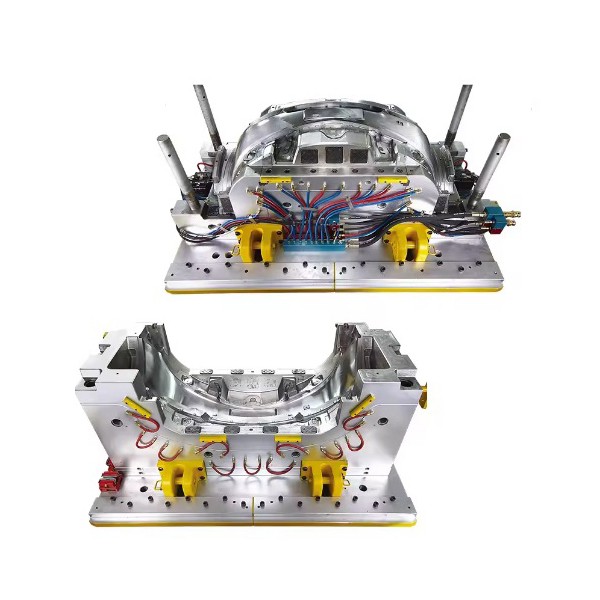

Compression moulding involves placing a pre - measured amount of plastic material into the mould cavity and then applying pressure to shape it. Compression Molds For Automotive are often used for certain types of front bumpers, especially those made from thermosetting plastics. Compression moulds tend to be relatively heavy because they need to withstand high pressures during the moulding process. The moulds are typically large and solid, with thick walls to ensure they do not deform under pressure.
Injection moulding, on the other hand, involves injecting molten plastic into the mould cavity at high pressure. Bumper Injection Mould can be designed to be more lightweight in some cases, especially if they are made using advanced manufacturing techniques and materials. However, for large - scale production of front bumpers, injection moulds can still be quite heavy, especially if they are designed for high - volume production and need to be very robust.
The weight of a front bumper mould is not just a matter of curiosity; it has practical implications in the automotive manufacturing industry. When it comes to transportation, heavy moulds require specialized equipment and careful handling. Trucks or trailers with high - load capacities are needed to transport these moulds safely from the manufacturing facility to the automotive plant. Specialized lifting equipment, such as cranes, is also required to load and unload the moulds.
In the manufacturing plant, the weight of the mould affects the setup and operation of the moulding machines. The machines need to be able to support the weight of the mould and provide the necessary pressure and movement for the moulding process. Additionally, the weight can impact the energy consumption of the machines, as more energy is required to move and operate heavier moulds.
As a supplier of Front Bumper Mould, we understand the importance of providing our clients with accurate information about the weight of our moulds. We work closely with our clients to understand their specific requirements and design moulds that meet their needs while also considering factors such as weight, cost, and performance.
If you are in the automotive industry and are looking for high - quality front bumper moulds, we are here to assist you. Our team of experts has extensive experience in designing and manufacturing front bumper moulds of various sizes and complexities. We can provide you with detailed information about the weight, dimensions, and performance of our moulds, and work with you to find the best solution for your production needs. Whether you are a small - scale manufacturer or a large automotive company, we are committed to delivering top - notch products and excellent customer service. Contact us today to start a discussion about your front bumper mould requirements and explore how we can help you achieve your manufacturing goals.
References
- Automotive Mould Design and Manufacturing Handbook
- Steel Alloys for Mould Making: Properties and Applications
- Compression and Injection Moulding Processes in the Automotive Industry