

What is the production capacity of a rear bumper mould? Well, that's a question I get asked a lot as a rear bumper mould supplier. In this blog, I'm gonna break down what affects the production capacity of these moulds and give you an idea of what you can expect.
Factors Affecting Rear Bumper Mould Production Capacity
1. Mould Design
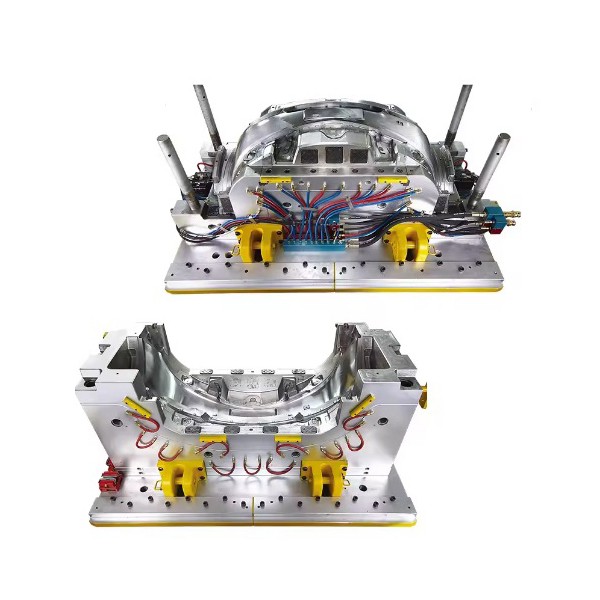
The design of the rear bumper mould is crucial. A well - designed mould can significantly boost production capacity. If the mould has a simple and efficient design, it allows for faster injection and ejection of the bumper. For example, a mould with a well - thought - out cooling system can cool the plastic faster, reducing the cycle time. On the other hand, a complex design with lots of undercuts or intricate details might slow down the production process.
2. Material of the Mould
The material used to make the rear bumper mould also plays a big role. High - quality materials like hardened steel can withstand high pressures and temperatures during the injection process. They are more durable and less likely to wear out quickly. This means that the mould can be used for a large number of production cycles without significant degradation. Cheaper materials might save you money upfront, but they can lead to more frequent repairs and replacements, which ultimately reduces the overall production capacity.
3. Injection Molding Machine
The injection molding machine that works with the rear bumper mould is another key factor. A more powerful and advanced machine can inject plastic into the mould at a higher speed and with better precision. It can also handle larger volumes of plastic, which is important for producing bigger rear bumpers. If the machine is old or not properly maintained, it might struggle to keep up with the demands of high - volume production.
4. Operator Skill
The skill of the operator running the injection molding process is often overlooked. An experienced operator knows how to optimize the settings of the injection molding machine for the specific rear bumper mould. They can quickly troubleshoot any issues that arise during production, such as blockages or uneven cooling. A novice operator might make mistakes that lead to production delays or defective parts, thus reducing the production capacity.
Typical Production Capacity Ranges
On average, a well - maintained rear bumper mould can produce anywhere from 10 to 30 rear bumpers per hour. However, this number can vary widely depending on the factors I mentioned above.
If you have a top - of - the - line mould, a high - performance injection molding machine, and a skilled operator, you might be able to push the production capacity to the higher end of that range. In some cases, with the latest technology and optimal conditions, it's possible to produce even more than 30 rear bumpers per hour.
On the other hand, if you're using an older mould, a less powerful machine, or an inexperienced operator, the production capacity could drop to as low as 5 rear bumpers per hour.
How to Maximize Production Capacity
1. Regular Maintenance
Regular maintenance of the rear bumper mould is essential. This includes cleaning the mould after each production run, checking for any signs of wear and tear, and lubricating moving parts. By keeping the mould in good condition, you can ensure that it operates at its peak performance and avoid unexpected breakdowns.
2. Upgrade Equipment
Consider upgrading your injection molding machine if it's outdated. Newer machines often come with advanced features that can improve the speed and quality of production. For example, some machines have better control systems that can adjust the injection speed and pressure in real - time, resulting in more consistent rear bumpers.
3. Train Operators
Invest in training your operators. Provide them with the knowledge and skills they need to operate the injection molding machine and the rear bumper mould effectively. This can include training on machine settings, troubleshooting, and quality control. A well - trained operator can make a big difference in the production capacity.
Other Related Moulds
If you're in the automotive parts manufacturing business, you might also be interested in other types of moulds. We also supply Car Lamp Injection Mold, which are used to produce high - quality car lamps. Our Front Bumper Mould are designed to meet the specific requirements of front bumper production. And for those looking for alternative manufacturing methods, we offer Compression Molds For Automotive.
Conclusion
Understanding the production capacity of a rear bumper mould is crucial for automotive parts manufacturers. By considering the factors that affect production capacity and taking steps to maximize it, you can ensure a more efficient and profitable production process. Whether you're a small - scale producer or a large - scale manufacturer, having a clear idea of what your rear bumper mould can achieve is essential.

If you're interested in our rear bumper moulds or any of our other products, don't hesitate to get in touch. We're always ready to discuss your specific requirements and help you find the best solutions for your production needs.
References
- Injection Molding Handbook by Ossenbruggen, C.
- Automotive Plastics and Composites by Huda, M. S.