

As a dedicated supplier of Front Grille Moulds, I am excited to delve into the intricacies of the injection molding process for front grilles using a mould. This process is a cornerstone in the manufacturing of high - quality front grilles, which are not only functional but also play a crucial role in the aesthetic appeal of vehicles and various other products.
Understanding the Basics of Injection Molding
Injection molding is a manufacturing process that involves injecting molten material into a mold cavity. The material then cools and solidifies, taking the shape of the mold. This method is highly efficient and can produce complex shapes with high precision and repeatability. For front grilles, the most commonly used materials are plastics such as polypropylene (PP), acrylonitrile butadiene styrene (ABS), and polycarbonate (PC). These materials offer a good balance of strength, durability, and cost - effectiveness.
The Steps in the Injection Molding Process for Front Grilles
1. Mold Design and Manufacturing
The first step in the injection molding process for front grilles is the design and manufacturing of the mold. The mold is a critical component as it determines the final shape, size, and quality of the front grille. Our team of experienced engineers uses advanced CAD/CAM software to design the mold, taking into account factors such as the grille's geometry, draft angles, and gate locations.
Once the design is finalized, the mold is manufactured using high - quality steel or aluminum. Precision machining techniques are employed to ensure that the mold has the required accuracy and surface finish. The mold is then polished to prevent any surface defects on the final product.
2. Material Preparation
Before the injection molding process begins, the plastic material needs to be prepared. The raw plastic pellets are first dried to remove any moisture, as moisture can cause defects in the final product such as bubbles or voids. The dried pellets are then fed into a hopper, which is connected to the injection molding machine.
3. Injection
The injection molding machine consists of a heating barrel, a screw, and a nozzle. The plastic pellets are fed into the heating barrel, where they are heated to a molten state. The screw then pushes the molten plastic through the nozzle and into the mold cavity. The injection process is carefully controlled to ensure that the mold is filled evenly and completely. The injection pressure, speed, and temperature are all adjusted according to the specific requirements of the front grille.
4. Cooling
After the mold is filled with molten plastic, the cooling process begins. Cooling is essential to solidify the plastic and give the front grille its final shape. The mold is equipped with a cooling system, which circulates water or other cooling fluids through channels in the mold. The cooling time depends on the thickness of the grille and the type of plastic material used.
5. Ejection
Once the plastic has cooled and solidified, the mold is opened, and the front grille is ejected. Ejection pins are used to push the grille out of the mold cavity. Care must be taken during the ejection process to prevent any damage to the grille. After ejection, the grille may undergo some post - processing operations such as trimming, painting, or assembly.

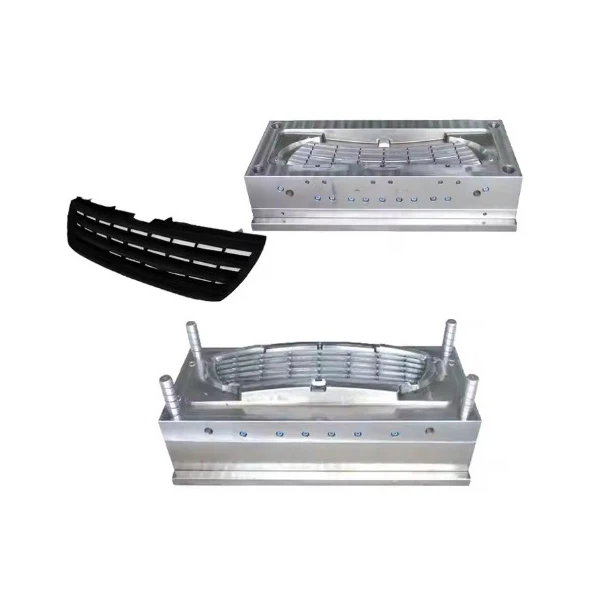
Advantages of Using Our Front Grille Moulds
Our Front Grille Moulds offer several advantages in the injection molding process. Firstly, our molds are designed with high precision, which ensures that the front grilles produced have a consistent quality and accurate dimensions. Secondly, our molds are made from high - quality materials, which makes them durable and resistant to wear and tear. This means that they can be used for a large number of production cycles without significant degradation.
We also offer a wide range of Front Grille Moulds, including Air Conditioner Grille Mold, Radiator Grille Mould, and Automotive Grille Injection Mould. These molds are suitable for different types of vehicles and applications, and we can customize them according to the specific requirements of our customers.
Quality Control in the Injection Molding Process
Quality control is an integral part of the injection molding process for front grilles. We have a strict quality control system in place to ensure that every front grille meets the highest standards. During the manufacturing process, we conduct regular inspections of the mold and the injection molding machine to ensure that they are operating properly.
After the front grilles are produced, they are subjected to a series of quality tests. These tests include visual inspections to check for surface defects, dimensional measurements to ensure that the grille meets the specified dimensions, and mechanical tests to evaluate the strength and durability of the grille. Only the grilles that pass all the quality tests are approved for shipment.
Conclusion
The injection molding process for front grilles using a mould is a complex but highly efficient manufacturing method. At our company, we are committed to providing high - quality Front Grille Moulds that enable our customers to produce front grilles with excellent quality and performance. Whether you are in the automotive industry or the air - conditioning industry, our range of Air Conditioner Grille Mold, Radiator Grille Mould, and Automotive Grille Injection Mould can meet your specific needs.
If you are interested in our Front Grille Moulds or have any questions about the injection molding process, please feel free to contact us for a detailed discussion and potential procurement. We look forward to partnering with you to create high - quality front grilles.
References
- "Injection Molding Handbook" by O. Olabisi
- "Plastics Processing Technology" by J. A. Brydson