

As a rear bumper mould supplier, I've witnessed firsthand the intricate dance between various manufacturing parameters and the final quality of the rear bumper. One such crucial parameter that often goes unnoticed but significantly impacts the bumper's quality is the injection time. In this blog, I'll delve into the influence of injection time on the quality of a rear bumper, exploring both the positive and negative effects, and how we, as a mould supplier, can help optimize this process.
Understanding Injection Molding in Rear Bumper Production
Before we discuss the influence of injection time, it's essential to understand the injection molding process for rear bumpers. Injection molding is a widely used manufacturing technique in the automotive industry, where molten plastic is injected into a mould cavity under high pressure. The plastic then cools and solidifies, taking the shape of the mould. The rear bumper, being a large and complex automotive part, requires precise control of the injection molding process to ensure high - quality production.
The Impact of Short Injection Time
1. Incomplete Filling
When the injection time is too short, the molten plastic may not have enough time to fill the entire mould cavity. This leads to incomplete filling, resulting in parts with missing sections or thin areas. In the case of rear bumpers, incomplete filling can compromise the structural integrity of the bumper. For example, areas that are not fully filled may be more prone to cracking or breaking under impact, which is a serious safety concern.
2. Weld Lines
Short injection times can also cause weld lines to form on the rear bumper. Weld lines occur when two or more flow fronts of molten plastic meet and fuse together. When the injection is too fast, these flow fronts may not have enough time to properly merge, creating weak points on the surface of the bumper. Weld lines not only affect the aesthetic appearance of the bumper but also reduce its mechanical strength.
The Impact of Long Injection Time
1. Material Degradation
If the injection time is too long, the molten plastic is exposed to high temperatures and pressures for an extended period. This can cause material degradation, where the polymer chains in the plastic break down. Material degradation can lead to a decrease in the mechanical properties of the rear bumper, such as reduced strength, stiffness, and impact resistance. Additionally, degraded plastic may have a discolored or uneven appearance, affecting the overall quality of the bumper.
2. Warping
Long injection times can also result in warping of the rear bumper. As the plastic cools and solidifies, it shrinks. When the injection time is long, the cooling process may be uneven, causing different parts of the bumper to shrink at different rates. This uneven shrinkage leads to warping, where the bumper may not have the correct shape or dimensions. Warped bumpers may not fit properly on the vehicle, which can cause alignment issues and affect the overall performance of the vehicle.
Optimizing Injection Time for Quality Rear Bumpers
As a rear bumper mould supplier, we play a crucial role in helping our customers optimize the injection time for their bumper production. We work closely with manufacturers to understand their specific requirements and the characteristics of the plastic materials they use.
1. Mould Design
A well - designed mould can help optimize the injection time. Our moulds are designed with precise flow channels and gates to ensure that the molten plastic can flow smoothly and evenly throughout the mould cavity. This reduces the risk of incomplete filling and weld lines, even with relatively short injection times. For example, we can use multi - gate systems to distribute the plastic more evenly, improving the filling process.
2. Process Monitoring and Control
We also provide support in process monitoring and control. By using advanced sensors and monitoring systems, manufacturers can closely monitor the injection process, including the injection time, temperature, and pressure. This allows them to make real - time adjustments to the injection time based on the actual production conditions. For instance, if the sensors detect that the filling is incomplete, the injection time can be slightly increased to ensure proper filling.
Related Products and Their Significance
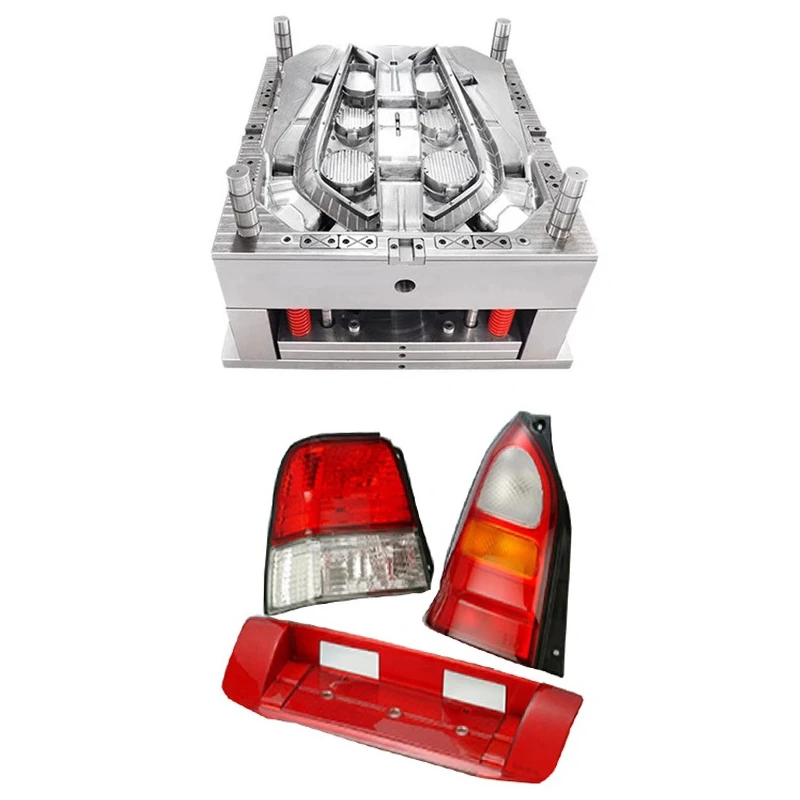
In addition to rear bumper moulds, we also offer other related products such as Compression Molds For Automotive and Car Lamp Injection Mold. These products are also crucial in the automotive manufacturing process. Compression molds can be used for producing other automotive parts with different materials and requirements, while car lamp injection molds are essential for manufacturing high - quality car lamps. Our Bumper Injection Mould is designed to work in harmony with these products, providing a comprehensive solution for automotive part production.

Conclusion and Call to Action
In conclusion, the injection time has a profound influence on the quality of a rear bumper. Both short and long injection times can lead to various quality issues, including incomplete filling, weld lines, material degradation, and warping. As a rear bumper mould supplier, we are committed to helping our customers optimize the injection time and ensure the production of high - quality rear bumpers.
If you are in the automotive manufacturing industry and are looking for reliable rear bumper moulds or other related products, we invite you to contact us for a detailed discussion. Our team of experts is ready to assist you in finding the best solutions for your production needs. Whether you need help with mould design, process optimization, or product selection, we are here to support you every step of the way.
References
- "Injection Molding Handbook" by O. Osswald and T. Turng
- "Plastics Engineering Handbook of the Society of Plastics Engineers" by Joel R. Frados