

Hey there! As a front bumper mould supplier, I often get asked about the best wear-resistant materials for these moulds. It's a crucial question because the durability of the mould directly impacts the quality and cost-effectiveness of producing front bumpers. So, let's dive right in and explore some of the top wear-resistant materials out there.
Tool Steel
Tool steel is hands down one of the most popular choices for front bumper moulds. It's known for its high hardness, excellent wear resistance, and good toughness. There are different types of tool steel, such as D2, H13, and P20.
D2 tool steel is a high-carbon, high-chromium alloy steel. It has a very high hardness after heat treatment, which makes it extremely resistant to wear. This is great for moulds that are used to produce a large number of front bumpers because it can withstand the repeated friction and pressure during the injection moulding process. However, D2 steel can be a bit brittle, so it needs to be handled with care during machining and use.
H13 tool steel is another excellent option. It's a hot-work tool steel that can handle high temperatures well. In the injection moulding process, the molten plastic is injected into the mould at high temperatures, and H13 can maintain its hardness and wear resistance even under these conditions. It also has good thermal fatigue resistance, which means it can withstand repeated heating and cooling cycles without cracking. This makes it suitable for long-term, high-volume production of front bumpers.
P20 tool steel is a pre-hardened steel that is relatively easy to machine. It has good wear resistance and is often used for lower-volume production or prototypes. It's a cost-effective choice for small-scale manufacturers who want to produce front bumpers without investing too much in expensive mould materials.
Carbide
Carbide is a super hard material that offers outstanding wear resistance. It's made up of tungsten carbide particles bonded together with a metal binder, usually cobalt. Carbide is much harder than tool steel, which means it can last much longer in high-wear applications.
In front bumper moulds, carbide inserts can be used in areas that experience the most wear, such as the gates and runners where the molten plastic enters the mould. These inserts can significantly extend the life of the mould and reduce the need for frequent repairs or replacements. However, carbide is more expensive than tool steel, and it can be more difficult to machine. So, it's typically used in specific areas of the mould rather than for the entire mould.
Stainless Steel
Stainless steel is not only corrosion-resistant but also has good wear resistance. It's a popular choice for front bumper moulds because it can produce high-quality, smooth-surfaced bumpers. There are different grades of stainless steel, and some are specifically designed for mould-making.
For example, 420 stainless steel is a martensitic stainless steel that can be heat-treated to achieve high hardness. It has good wear resistance and is also resistant to corrosion, which is important if the mould is exposed to moisture or chemicals during the production process. 17-4PH stainless steel is another option. It's a precipitation-hardening stainless steel that offers excellent strength, toughness, and wear resistance. It can be easily machined and is often used for complex-shaped front bumper moulds.
Ceramic
Ceramics are known for their extreme hardness and wear resistance. They can withstand high temperatures and abrasive forces better than most metals. In front bumper moulds, ceramic coatings or inserts can be used to improve the wear resistance of the mould surface.
Ceramic coatings can be applied to the mould using techniques like thermal spraying or physical vapor deposition. These coatings form a hard, protective layer on the mould surface, reducing friction and wear. Ceramic inserts, on the other hand, can be inserted into the mould in areas that are prone to wear. However, ceramics are brittle and can be difficult to work with, so they need to be carefully integrated into the mould design.
Choosing the Right Material
When choosing a wear-resistant material for a front bumper mould, there are several factors to consider. The production volume is a key factor. If you're producing a large number of front bumpers, you'll need a material that can withstand high wear and last a long time, such as H13 tool steel or carbide inserts. For lower-volume production, P20 tool steel or stainless steel might be sufficient.
The type of plastic used for the front bumper also matters. Some plastics are more abrasive than others, and they can cause more wear on the mould. For example, filled plastics that contain glass fibers or other additives are more abrasive than unfilled plastics. In this case, a harder and more wear-resistant material like carbide or D2 tool steel might be necessary.
The complexity of the mould design is another consideration. If the mould has complex shapes or features, it might be more difficult to machine certain materials. For example, carbide is very hard and can be challenging to machine into complex shapes, while P20 tool steel is easier to work with.

Our Offerings
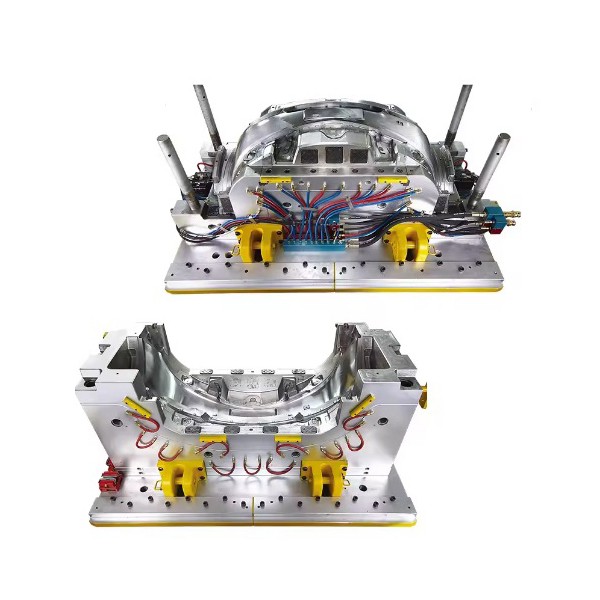
As a front bumper mould supplier, we have extensive experience in using these wear-resistant materials to create high-quality moulds. We offer a wide range of options, from Compression Molds For Automotive to Car Lamp Injection Mold and, of course, Front Bumper Mould. We work closely with our customers to understand their specific needs and recommend the most suitable wear-resistant material for their project.
If you're in the market for a front bumper mould, don't hesitate to reach out to us. We're here to help you find the best solution for your production requirements. Whether you need a mould for a small-scale prototype or a high-volume production line, we've got you covered.
References
- "Tool and Die Materials" by ASM International
- "Plastic Injection Molding Handbook" by O. Murray Bowen
- "Ceramic Materials and Components for Energy and Environmental Applications" by C. C. Berndt and R. Vaßen