

Hey there! As a grille mould supplier, I've seen firsthand how important it is to have top - notch inspection methods for these moulds. Grille moulds are used in a variety of industries, from automotive to home appliances, and the quality of the mould directly impacts the quality of the final product. So, let's dive into the inspection methods for a grille mould.
Visual Inspection
First off, visual inspection is the most basic yet crucial step. When a grille mould comes off the production line or is being maintained, we start by taking a good look at it. We check for any obvious signs of damage, like cracks, chips, or scratches. Even a small scratch can affect the surface finish of the grille produced by the mould.

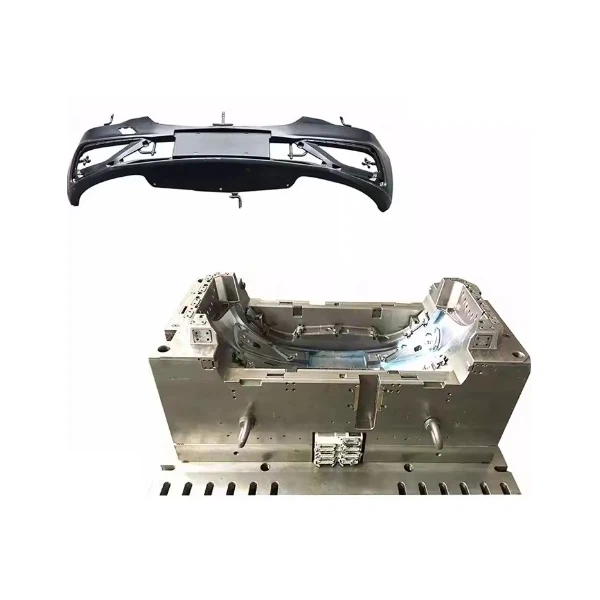
We also look at the overall shape and dimensions. The mould should match the design specifications precisely. Any deviations can lead to ill - fitting grilles. For example, in an Radiator Grille Mould, if the dimensions are off, the radiator grille might not fit properly in the vehicle, causing all sorts of problems.
During visual inspection, we use proper lighting to ensure we don't miss any details. A well - lit environment helps us spot even the tiniest defects that could otherwise go unnoticed. And we're not just looking at the outside. We also check the internal cavities of the mould, especially for complex grille designs. These cavities need to be smooth and free of any debris or rough spots that could affect the flow of the plastic during the injection - molding process.
Dimensional Inspection
Dimensional inspection is another key part of the process. We use precision measuring tools like calipers, micrometers, and coordinate measuring machines (CMMs). Calipers are great for quickly checking basic dimensions like the thickness of the mould walls or the diameter of small holes. Micrometers, on the other hand, offer even more accurate measurements, which are essential for parts that require high precision.
CMMs are the real heavy - hitters in dimensional inspection. They can measure the 3D shape of the mould with extremely high accuracy. We can program the CMM to measure multiple points on the mould surface and compare the results with the design specifications. This way, we can detect any minute deviations that might not be visible to the naked eye.
For instance, in a Grille Cover Mould, the fit between the grille cover and the rest of the assembly is crucial. Dimensional inspection ensures that the mould produces grille covers that fit perfectly, reducing the need for post - production adjustments.
Surface Finish Inspection
The surface finish of a grille mould is super important. A smooth surface finish on the mould will result in a high - quality finish on the grille. We use a surface roughness tester to measure the surface roughness of the mould. This device measures the height variations on the surface of the mould.
If the surface is too rough, it can cause issues like plastic sticking to the mould during the injection - molding process. This can lead to defects on the grille, such as poor surface quality or even parts of the grille getting left behind in the mould.
For a Air Conditioner Grille Mold, a smooth surface finish is essential for both aesthetic and functional reasons. A rough surface could disrupt the air flow through the grille, affecting the performance of the air conditioner.
Material Inspection
The material of the grille mould plays a huge role in its performance and durability. We conduct material inspections to ensure that the mould is made from the right material and that the material meets the required quality standards.
One common method is hardness testing. We use a hardness tester to measure the hardness of the mould material. The hardness affects the mould's resistance to wear and tear, as well as its ability to withstand the high pressures and temperatures during the injection - molding process.
We also perform chemical analysis to determine the composition of the material. This helps us ensure that the material has the right properties, such as corrosion resistance and strength. If the material composition is off, the mould might not last as long or could develop problems over time.
Functionality Testing
After all the physical inspections, we move on to functionality testing. This involves using the mould in a real - world or simulated injection - molding process. We inject plastic into the mould and check the quality of the grilles produced.
We look at factors like the fill rate of the mould. If the plastic doesn't fill the mould properly, it could be due to issues like blockages in the runner system or improper gate design. We also check the ejection of the grilles from the mould. The grilles should eject smoothly without any damage.
Functionality testing allows us to identify any hidden problems that might not be detected through other inspection methods. It's like giving the mould a real - world test drive to make sure it performs as expected.
Non - Destructive Testing (NDT)
Non - destructive testing methods are also used to inspect grille moulds. One common NDT method is ultrasonic testing. Ultrasonic waves are sent through the mould material, and any defects like internal cracks or voids will cause the waves to reflect differently. By analyzing these reflections, we can detect hidden flaws in the mould.
Another NDT method is magnetic particle testing, which is used for ferromagnetic materials. A magnetic field is applied to the mould, and magnetic particles are sprinkled on the surface. If there are any surface or near - surface defects, the magnetic particles will gather at those locations, making the defects visible.
NDT methods are great because they allow us to inspect the mould without damaging it. This means we can continue to use the mould after the inspection, as long as no major defects are found.
Regular Maintenance and Follow - up Inspections
Inspection isn't a one - time thing. We also perform regular maintenance on the grille moulds and follow - up inspections. Regular maintenance helps prevent problems from occurring in the first place. We clean the moulds, lubricate moving parts, and make any minor repairs as needed.
Follow - up inspections are done at regular intervals to check the condition of the mould after a certain number of production cycles. This helps us catch any wear and tear early on and take appropriate action, such as re - machining or replacing parts of the mould.
In conclusion, a comprehensive inspection of grille moulds is essential for ensuring high - quality products. By using a combination of visual, dimensional, surface finish, material, functionality, and non - destructive testing methods, we can guarantee that our grille moulds meet the highest standards.
If you're in the market for high - quality grille moulds or have any questions about our inspection methods, feel free to reach out for a procurement discussion. We're always happy to help you find the perfect mould for your needs.
References
- Injection Molding Handbook by O. Olszewski
- Plastics Mold Engineering by H. G. Giles
- Non - Destructive Testing Handbook, Volume 1: Ultrasonic Testing by P. C. McMaster