

As a supplier of Baby Car Molds, I often get asked about the heat-resistant properties of these molds. Heat resistance is a crucial factor in the manufacturing process of baby cars, as it directly impacts the quality, durability, and safety of the final product. In this blog post, I will delve into the heat-resistant properties of baby car molds, exploring the materials used, the testing methods, and the importance of heat resistance in the production of high-quality baby cars.
Materials Used in Baby Car Molds
The choice of materials for baby car molds plays a significant role in determining their heat-resistant properties. Most baby car molds are made from high-quality metals and plastics, each with its own unique characteristics and heat resistance capabilities.
Metals
Metals such as steel and aluminum are commonly used in the production of baby car molds due to their excellent heat resistance, strength, and durability. Steel molds, in particular, are known for their high melting points and ability to withstand extreme temperatures without deforming. This makes them ideal for use in injection molding processes, where the mold is subjected to high pressures and temperatures during the production of baby car parts.
Aluminum molds, on the other hand, are lighter and more cost-effective than steel molds. They also have good heat conductivity, which allows for faster cooling times and more efficient production processes. While aluminum molds may not have the same high melting point as steel molds, they can still withstand relatively high temperatures and are suitable for many baby car molding applications.
Plastics
Plastics are another popular choice for baby car molds, especially for smaller, less complex parts. Some plastics, such as thermosetting plastics, have excellent heat resistance properties and can withstand high temperatures without melting or deforming. These plastics are often used in the production of parts that require high heat resistance, such as engine components or electrical connectors.
Other plastics, such as thermoplastics, are more flexible and can be easily molded into different shapes. While thermoplastics may not have the same high heat resistance as thermosetting plastics, they can still be used in the production of baby car parts that do not require extreme heat resistance.
Testing Methods for Heat Resistance
To ensure that baby car molds have the necessary heat-resistant properties, they are subjected to a variety of testing methods. These tests are designed to simulate the conditions that the mold will be exposed to during the manufacturing process and to evaluate its performance under these conditions.
Thermal Cycling Tests
Thermal cycling tests involve subjecting the mold to repeated cycles of heating and cooling to simulate the temperature changes that occur during the injection molding process. The mold is heated to a specific temperature for a set period of time and then cooled to room temperature. This process is repeated multiple times to evaluate the mold's ability to withstand thermal stress without cracking or deforming.
High-Temperature Testing
High-temperature testing involves heating the mold to a specific temperature and holding it at that temperature for a set period of time. This test is designed to evaluate the mold's ability to withstand high temperatures without melting or deforming. The mold is inspected after the test to check for any signs of damage or deformation.
Heat Transfer Testing
Heat transfer testing involves measuring the rate at which heat is transferred through the mold during the injection molding process. This test is important because it can affect the cooling time of the baby car parts and the overall efficiency of the production process. The mold's heat transfer properties are evaluated by measuring the temperature difference between the inside and outside of the mold during the heating and cooling cycles.
Importance of Heat Resistance in Baby Car Production
The heat-resistant properties of baby car molds are crucial for several reasons. Firstly, heat resistance ensures that the mold can withstand the high temperatures and pressures that are generated during the injection molding process. This helps to prevent the mold from deforming or cracking, which can lead to defective baby car parts and production delays.
Secondly, heat resistance is important for the quality and durability of the baby car parts. When the mold is able to maintain its shape and integrity under high temperatures, the baby car parts will have a more consistent quality and will be less likely to develop defects or deformities. This is especially important for parts that are subjected to high stress or wear, such as wheels or chassis components.
Finally, heat resistance is essential for the safety of the baby car. Baby cars are often used in a variety of environments, including hot summer days and cold winter nights. If the baby car parts are not able to withstand these temperature changes, they may become brittle or break, which can pose a safety hazard to the child. By using molds with high heat resistance, manufacturers can ensure that the baby car parts are safe and reliable.
Conclusion
In conclusion, the heat-resistant properties of baby car molds are a critical factor in the production of high-quality, safe, and durable baby cars. The choice of materials, the testing methods, and the importance of heat resistance all play a role in ensuring that the molds can withstand the high temperatures and pressures that are generated during the injection molding process.
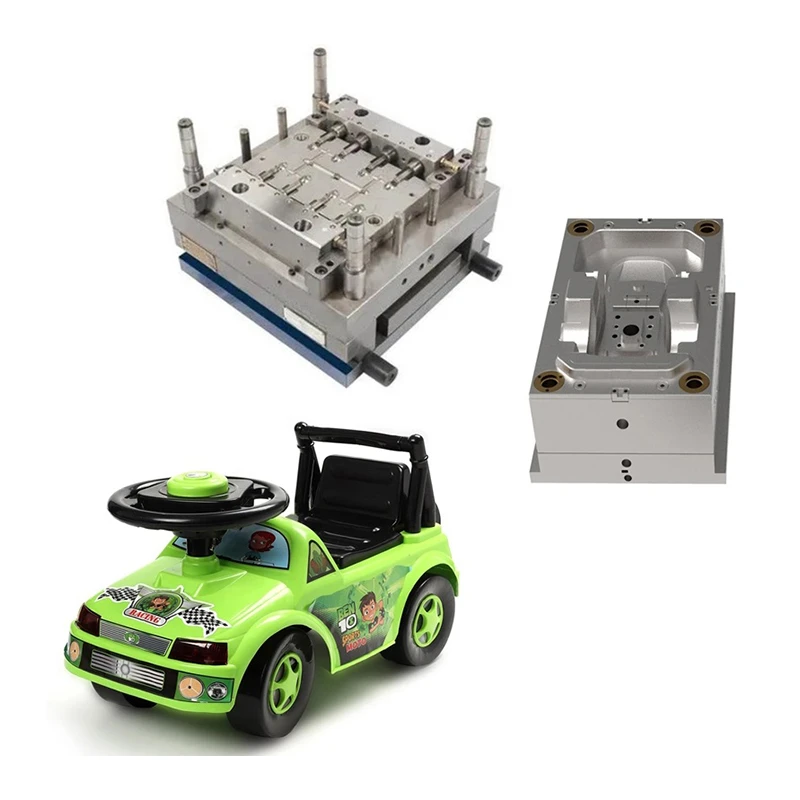

As a supplier of Baby Car Mold, I am committed to providing our customers with molds that have excellent heat-resistant properties. We use high-quality materials and advanced manufacturing techniques to ensure that our molds are able to withstand the most demanding production environments. Our molds are also subjected to rigorous testing to ensure that they meet the highest standards of quality and performance.
If you are in the market for a reliable supplier of baby car molds, I encourage you to contact us to discuss your specific requirements. We would be happy to provide you with more information about our products and services and to help you find the right mold for your needs. Whether you are looking for a Plastic Toy Mould or a Children Electrical Car Mould, we have the expertise and experience to meet your needs.
References
- "Injection Molding: Principles and Practice" by Rosato, Rosato, and Cogswell
- "Plastics Materials and Processing" by Bill Mooney
- "Handbook of Mold Manufacturing" by Peter F. Upton