

Hey there! I'm a supplier of rocking cars, and one question I get asked a lot is, "What age range is suitable for a rocking car?" Well, let's dive right into it and break it down.
First off, it's important to understand that rocking cars come in all shapes and sizes, and different models are designed with different age groups in mind. Generally speaking, the earliest age at which a child can start using a rocking car is around 6 months. At this stage, babies are starting to develop better head and neck control, which is essential for safely using a rocking car.
For 6 - 12 month - old babies, we have some really cute and safe rocking car options. These rocking cars are usually low to the ground, with wide bases for stability. They often come with soft padding to keep the little ones comfortable. For example, our Rocking Car is a great choice for this age group. It has a gentle rocking motion that won't be too overwhelming for the baby. The bright colors and simple designs also tend to attract their attention.
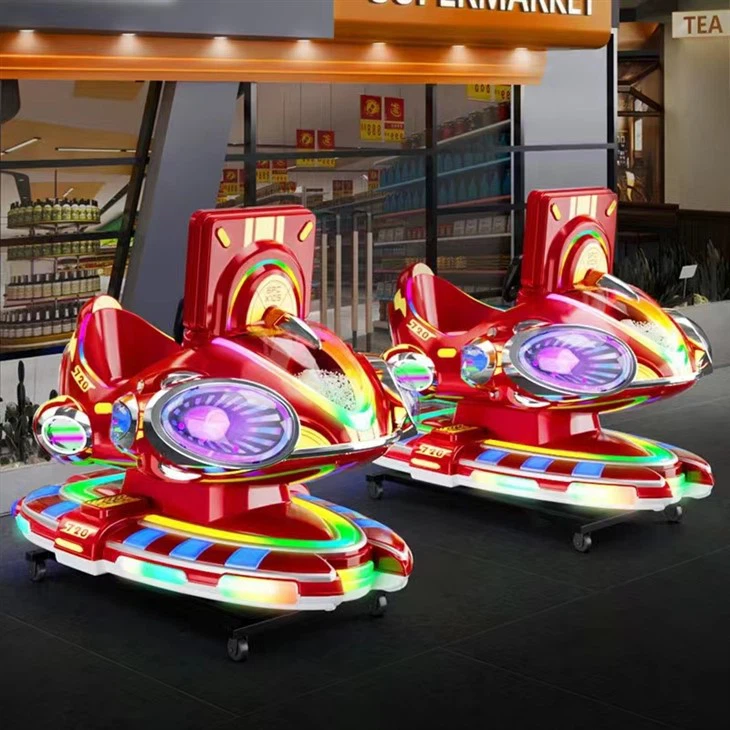
As babies grow into toddlers, around 1 - 3 years old, they become more active and adventurous. They can start to use rocking cars with more features. Our Galaxy Fighter is a hit with this age group. It has a cool space - themed design that kids love. At this age, toddlers have better balance and coordination, so they can start to control the rocking motion more effectively. They can push themselves back and forth, which helps in developing their leg muscles and gross motor skills.
When kids reach the age of 3 - 5 years old, they are looking for even more excitement. Our Airship Product is perfect for them. It has a more complex design and might come with some additional features like sound effects or movable parts. At this stage, children have a well - developed sense of imagination, and these rocking cars can be a great way for them to engage in pretend play. They can imagine they're flying through the air or on a great adventure.
But it's not just about the age; we also need to consider the child's physical development. Some kids might be ready for a more advanced rocking car earlier than others, while some might need a bit more time to build up the necessary skills. For instance, if a child is smaller or has slower physical development, it might be better to stick with a simpler rocking car for a bit longer.
Safety is always a top priority when it comes to choosing a rocking car for your child. Make sure the rocking car is made from high - quality materials that are non - toxic and durable. Check for any sharp edges or small parts that could pose a choking hazard. Also, always supervise your child when they're using a rocking car, especially if they're younger.
Now, let's talk about the benefits of rocking cars for different age groups. For babies, the gentle rocking motion can be very soothing. It can help them relax and even fall asleep. It also provides a bit of sensory stimulation, which is important for their early development.
For toddlers, rocking cars are a great way to improve their balance and coordination. As they push themselves back and forth, they're learning how to control their body movements. This is a crucial step in their physical development.
For older kids, rocking cars encourage imaginative play. They can create their own stories and scenarios, which helps in developing their creativity and cognitive skills.
If you're a parent or a caregiver thinking about getting a rocking car for your child, I hope this information has been helpful. We have a wide range of rocking cars to suit different age groups and preferences. Whether you're looking for a simple and safe rocking car for a baby or a more exciting one for an older child, we've got you covered.

If you're interested in purchasing our rocking cars, we'd love to have a chat with you. Just reach out to us, and we can discuss your specific needs. We offer great quality products at competitive prices, and we're always happy to help you find the perfect rocking car for your little one.
References
- Child Development Institute. (2023). Physical Development in Children.
- American Academy of Pediatrics. (2023). Safety Guidelines for Children's Toys.