

Hey there! I'm a supplier of Plastic Spool Moulds, and I know how crucial it is to cut down the production cycle time. In the competitive world of plastic spool manufacturing, every second counts. A shorter production cycle means more products can be churned out in less time, leading to higher profits and a better edge over the competition. So, let's dive into some practical ways to reduce the production cycle time of a plastic spool mould.
Optimize the Mould Design
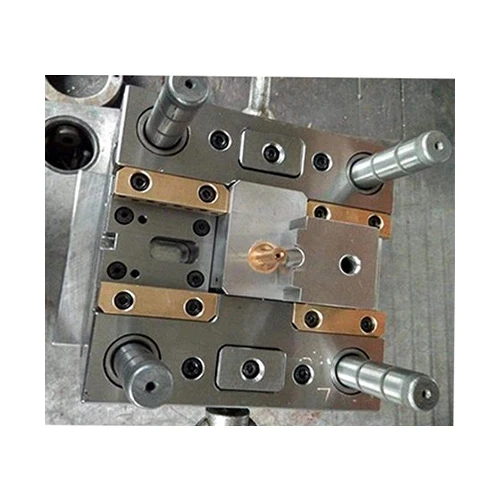
The first step in reducing the production cycle time starts with the mould design. A well - designed mould can significantly speed up the entire production process. When designing the mould, we need to consider factors like the number of cavities, the flow path of the plastic, and the ease of ejection.
For instance, increasing the number of cavities in the mould allows multiple plastic spools to be produced in a single injection cycle. However, we can't just blindly add more cavities. We have to ensure that the plastic can flow evenly into each cavity. Uneven flow can lead to defects in the spools and may even require additional processing time to fix.
Another important aspect is the design of the flow path. A smooth and efficient flow path reduces the time it takes for the plastic to fill the mould. We can use simulation software to analyze the flow of plastic in the mould and make adjustments to the design accordingly. This way, we can avoid bottlenecks and ensure a rapid and uniform filling process.
The ejection system also plays a vital role. A well - designed ejection system allows the finished spools to be removed from the mould quickly and easily. We can use techniques like ejector pins, stripper plates, or hydraulic ejection systems. The key is to choose the right ejection method based on the shape and size of the plastic spool.
Select the Right Plastic Material
The choice of plastic material can have a huge impact on the production cycle time. Different plastics have different melting points, flow properties, and cooling times. We need to select a plastic material that can be easily processed and has a relatively short cooling time.
For example, some thermoplastics like polypropylene (PP) and polyethylene (PE) are popular choices for plastic spools. They have good flow properties, which means they can fill the mould quickly. Also, they cool down relatively fast compared to some other plastics. This allows us to shorten the cooling time in the production cycle.
On the other hand, if we choose a plastic material with poor flow properties or a long cooling time, it will slow down the entire process. We might have to increase the injection pressure or wait longer for the plastic to cool, which adds to the production cycle time.
Improve the Injection Molding Process
The injection molding process itself can be optimized to reduce the production cycle time. One of the key factors is the injection speed. By increasing the injection speed, we can fill the mould faster. However, we need to be careful not to increase the speed too much, as it can cause issues like air traps or flash in the spools.
The temperature control during the injection molding process is also crucial. We need to maintain the right temperature for the plastic material. If the temperature is too low, the plastic may not flow properly, and if it's too high, it can lead to degradation of the plastic. By accurately controlling the temperature, we can ensure a smooth and efficient injection process.
Another aspect is the holding pressure. The holding pressure is applied after the mould is filled to ensure that the plastic takes the shape of the mould properly. We need to set the right holding pressure and holding time. A too - high holding pressure or a too - long holding time can increase the production cycle time without adding much value.
Upgrade the Molding Equipment
Investing in modern and efficient molding equipment can significantly reduce the production cycle time. Newer machines often come with advanced features like faster injection speeds, better temperature control, and more precise pressure regulation.
For example, some high - end injection molding machines have servo - driven systems that can respond quickly to changes in the process. This allows for more accurate and faster injection, filling, and holding operations. Also, these machines are often more energy - efficient, which can save costs in the long run.
We can also consider using auxiliary equipment like hot runners. Hot runners keep the plastic in a molten state in the injection system, which reduces the time it takes for the plastic to reach the mould. This can lead to a shorter production cycle, especially for large - scale production.
Implement Lean Manufacturing Principles
Lean manufacturing is all about eliminating waste and improving efficiency. In the context of plastic spool mould production, we can apply lean principles to reduce the production cycle time.
One of the key lean principles is to reduce setup time. Setup time includes activities like changing the mould, adjusting the machine settings, and preparing the raw materials. We can use techniques like single - minute exchange of dies (SMED) to reduce the setup time. SMED involves separating internal and external setup activities and performing as many external activities as possible while the machine is still running.
We can also implement a just - in - time (JIT) inventory system. This means having the right amount of raw materials and supplies at the right time. By reducing inventory levels, we can free up space and reduce the time spent on inventory management.
Use Automation and Robotics
Automation and robotics can play a big role in reducing the production cycle time. For example, we can use robots to perform tasks like loading and unloading the mould, inspecting the finished spools, and packaging.
Robots are much faster and more accurate than human workers in performing repetitive tasks. They can work 24/7 without getting tired, which means we can increase the overall production output. Also, robots can perform tasks with a high degree of precision, which reduces the chances of defects and rework.
In addition, we can use automated quality control systems. These systems can quickly detect defects in the plastic spools and separate the defective ones from the good ones. This saves time that would otherwise be spent on manual inspection.
Continuous Monitoring and Improvement
Finally, we need to continuously monitor the production process and make improvements. We can use data analytics to collect and analyze data on the production cycle time, defect rates, and other key performance indicators.
By analyzing this data, we can identify areas for improvement. For example, if we notice that the cooling time is consistently longer than expected, we can investigate the cause. It could be due to a problem with the cooling system or the choice of plastic material. Once we identify the root cause, we can take corrective actions to reduce the cooling time.
In conclusion, reducing the production cycle time of a plastic spool mould requires a comprehensive approach. It involves optimizing the mould design, selecting the right plastic material, improving the injection molding process, upgrading the equipment, implementing lean manufacturing principles, using automation and robotics, and continuous monitoring and improvement.
If you're in the market for high - quality Injection Plastic Spool Bobbin Mould, Plastic Cone Bobbin Mould, or Cable Spool Plastic Injection Mold, and want to reduce your production cycle time, feel free to reach out to us. We're here to help you optimize your production process and achieve greater efficiency.
References
- Campbell, F. C. (2008). Manufacturing Engineering & Technology. Pearson Prentice Hall.
- Groover, M. P. (2010). Fundamentals of Modern Manufacturing: Materials, Processes, and Systems. Wiley.
- Throne, J. L. (1996). Polymer Rheology in Injection Molding. Marcel Dekker.