

As a supplier of Plastic Chair Moulds, I understand the critical importance of ensuring the quality of our products. In the highly competitive market of plastic chair manufacturing, the quality of the mould directly impacts the final product's quality, production efficiency, and cost - effectiveness. This blog will delve into the various methods and factors to consider when measuring the quality of a plastic chair mould.
1. Material Quality
The first and foremost aspect in evaluating the quality of a plastic chair mould is the material used in its construction. High - quality materials are the foundation of a durable and long - lasting mould.
Steel Grade
The most common material for plastic chair moulds is steel. We typically use high - grade tool steels such as P20, H13, etc. P20 steel is widely used for its good machinability, polishability, and moderate toughness. It is suitable for lower - volume production of plastic chairs. On the other hand, H13 steel is a hot - work tool steel that offers excellent heat resistance, high strength, and good wear resistance. It is ideal for high - volume production, especially in the Chair Injection Mould process where the mould is exposed to high temperatures and pressures during injection.
Material Hardness and Toughness
A proper balance between hardness and toughness is crucial. A mould with high hardness can resist wear and deformation during the injection process, ensuring the dimensional accuracy of the plastic chairs. However, if the material is too hard, it may become brittle and prone to cracking. Conversely, a mould with high toughness can withstand the impact forces during the opening and closing of the mould, but may wear out more quickly. We conduct hardness tests using Rockwell or Brinell hardness testers to ensure the material meets the required specifications.
2. Dimensional Accuracy
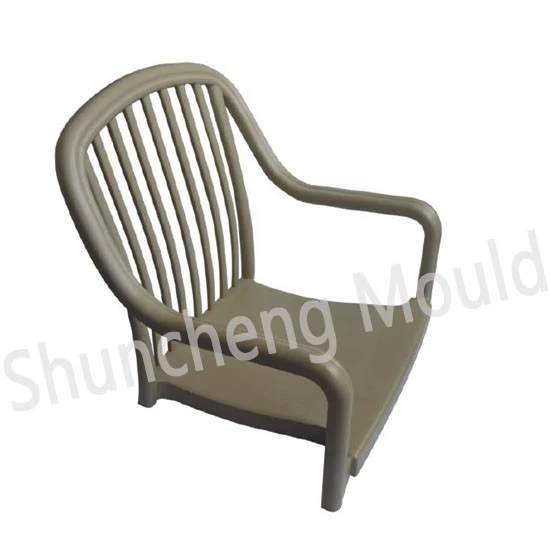
The dimensional accuracy of a plastic chair mould determines the precision of the final plastic chairs. Any deviation in the mould's dimensions can lead to defective products, such as chairs with uneven legs or misaligned parts.
Tolerance
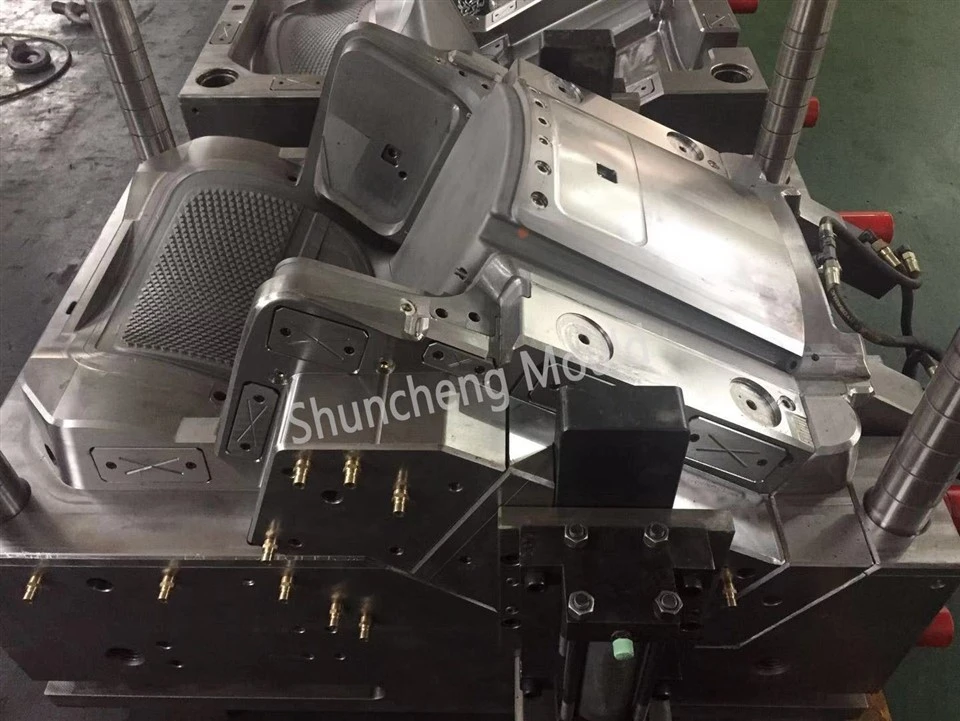
We measure the dimensional accuracy of our moulds using advanced measuring tools like coordinate measuring machines (CMMs). These machines can accurately measure the length, width, height, and other critical dimensions of the mould cavities. The tolerance for most plastic chair moulds is typically within ±0.05mm for general applications. For high - end or custom - designed chairs, the tolerance requirement may be even stricter, within ±0.02mm.
Surface Finish
In addition to the overall dimensions, the surface finish of the mould cavities also affects the appearance and functionality of the plastic chairs. A smooth surface finish reduces friction during the ejection process, prevents scratches on the plastic chairs, and enhances the aesthetic appeal of the final product. We use techniques such as mirror polishing to achieve a high - quality surface finish on the mould cavities, with a surface roughness of Ra 0.02 - 0.05μm.
3. Structural Design
The structural design of a plastic chair mould plays a vital role in its performance and durability.
Cooling Channels
Efficient cooling is essential for reducing the cycle time of plastic chair production and ensuring the uniform shrinkage of the plastic material. A well - designed cooling system should have evenly distributed cooling channels throughout the mould. The diameter, spacing, and layout of the cooling channels are carefully calculated to ensure optimal heat transfer. For example, in a Chair Gas - assisted Injection Mold, the cooling channels need to be designed to accommodate the gas - assisted injection process, which may require a more complex cooling strategy.
Ejection System
The ejection system is responsible for removing the finished plastic chairs from the mould cavities. A reliable ejection system should be able to eject the chairs smoothly and without causing any damage. We use various types of ejection mechanisms, such as ejector pins, ejector plates, and air ejection. The number, size, and position of the ejector pins are determined based on the shape and size of the plastic chairs to ensure even ejection forces.
4. Mould Life
The mould life is an important indicator of the quality of a plastic chair mould. A long - lasting mould reduces the frequency of mould replacement, which in turn lowers the production cost.
Wear Resistance
The wear resistance of the mould depends on the material quality, surface treatment, and operating conditions. We apply surface treatments such as nitriding or chrome plating to improve the wear resistance of the mould cavities. Nitriding forms a hard nitride layer on the surface of the steel, increasing its hardness and wear resistance. Chrome plating provides a smooth and corrosion - resistant surface, reducing friction and wear during the injection process.
Fatigue Resistance
During the repeated opening and closing of the mould, as well as the injection and ejection processes, the mould is subjected to cyclic stresses. A high - quality mould should have good fatigue resistance to prevent cracking and failure. We use finite element analysis (FEA) software to simulate the stress distribution in the mould during operation and optimize the design to reduce stress concentrations and improve fatigue resistance.
5. Production Efficiency
The quality of a plastic chair mould can also be evaluated based on its impact on production efficiency.
Cycle Time
A shorter cycle time means more plastic chairs can be produced in a given period. The cycle time of the moulding process is affected by factors such as the cooling time, injection time, and ejection time. By optimizing the cooling system, injection parameters, and ejection mechanism, we can significantly reduce the cycle time of our Plastic Chair Injection Mould.
Scrap Rate
A low scrap rate is an indication of a high - quality mould. Defective products can be caused by various factors, such as uneven cooling, poor ejection, or dimensional inaccuracies. We closely monitor the scrap rate during the production process and continuously improve the mould design and manufacturing process to reduce the scrap rate.
Conclusion
Measuring the quality of a plastic chair mould involves a comprehensive evaluation of multiple factors, including material quality, dimensional accuracy, structural design, mould life, and production efficiency. As a supplier, we are committed to providing our customers with high - quality plastic chair moulds that meet their specific requirements.
If you are interested in our plastic chair moulds or have any questions about mould quality, please feel free to contact us for a detailed discussion and procurement negotiation. We look forward to working with you to achieve your production goals.
References
- "Tool and Die Making Handbook" by Peter H. Nachtigall
- "Plastic Injection Molding Handbook" by Omonov, A. A.
- Technical papers on plastic mould manufacturing from industry - leading research institutions.