

In the automotive manufacturing industry, bumper molds play a crucial role in producing high - quality bumpers. As a supplier of bumper molds, I understand the significance of durability in these molds. A durable bumper mold not only ensures a longer service life but also guarantees consistent quality in the produced bumpers, which in turn reduces production costs and enhances overall efficiency. In this blog, I will share some effective ways to improve the durability of a bumper mold.
Material Selection
The choice of material for a bumper mold is fundamental to its durability. High - quality tool steels are commonly used for bumper molds due to their excellent mechanical properties. For instance, P20 and H13 steels are popular choices. P20 steel is pre - hardened, which makes it relatively easy to machine and offers good wear resistance. It is suitable for medium - production volume bumper molds. On the other hand, H13 steel is a hot - work tool steel with high toughness, thermal fatigue resistance, and wear resistance. It can withstand the high temperatures and pressures involved in the injection molding process, making it ideal for high - volume production of bumper molds.
When selecting the material, it is also important to consider the source and quality control of the steel. Working with reputable steel suppliers who can provide detailed material certificates ensures that the steel meets the required standards. Additionally, proper heat treatment of the selected steel is essential. Heat treatment can enhance the hardness, strength, and wear resistance of the mold. Processes such as quenching and tempering can be precisely controlled to achieve the desired material properties.
Design Optimization
A well - designed bumper mold can significantly improve its durability. Firstly, the gating system design is crucial. The gating system is responsible for delivering the molten plastic into the mold cavity. An improper gating system can cause uneven flow of the plastic, leading to stress concentrations in the mold. By designing a balanced gating system, the plastic can flow evenly into the cavity, reducing the risk of mold damage. For example, using multiple gates can distribute the pressure more evenly across the mold.
Secondly, the cooling system design also plays a vital role. Efficient cooling can reduce the cycle time of the molding process and prevent thermal stress in the mold. A well - designed cooling system should ensure uniform cooling of the mold cavity, which helps to maintain the dimensional accuracy of the produced bumpers and extends the mold's service life. For instance, using cooling channels with an appropriate diameter and layout can enhance the heat transfer efficiency.
Moreover, the draft angle of the mold cavity should be carefully considered. A sufficient draft angle allows the molded bumper to be easily ejected from the mold without causing excessive friction or damage to the mold surface. Generally, a draft angle of 1 - 3 degrees is recommended for bumper molds, depending on the complexity of the part.
Surface Treatment
Surface treatment is an effective way to improve the wear resistance and corrosion resistance of a bumper mold. One of the most common surface treatment methods is nitriding. Nitriding involves diffusing nitrogen into the surface of the mold steel to form a hard nitride layer. This layer can significantly improve the hardness and wear resistance of the mold surface, reducing the risk of abrasion during the molding process.
Another surface treatment option is chrome plating. Chrome plating provides a smooth and hard surface that can resist corrosion and wear. It also reduces the friction between the mold and the plastic, making it easier for the molded part to be ejected. However, proper preparation and control of the plating process are necessary to ensure a uniform and defect - free coating.
In addition to these traditional surface treatment methods, advanced coatings such as diamond - like carbon (DLC) coatings are also being increasingly used. DLC coatings offer excellent hardness, low friction coefficient, and high chemical stability, which can greatly enhance the durability of the bumper mold.
Maintenance and Inspection
Regular maintenance and inspection are essential for prolonging the life of a bumper mold. After each production cycle, the mold should be cleaned thoroughly to remove any residual plastic, lubricants, or contaminants. This can prevent the accumulation of debris, which may cause scratches or corrosion on the mold surface.
Lubrication is also an important part of maintenance. Applying a suitable lubricant to the moving parts of the mold, such as ejector pins and slides, can reduce friction and wear. However, it is important to use the right type of lubricant that is compatible with the mold material and the plastic being molded.
Periodic inspection of the mold is necessary to detect any signs of wear, damage, or deformation. Visual inspection can be used to check for surface cracks, scratches, or erosion. Dimensional inspection using precision measuring tools can ensure that the mold maintains its accuracy over time. If any issues are detected during the inspection, prompt repairs should be carried out to prevent further damage.
Operator Training
The skills and knowledge of the operators can have a significant impact on the durability of the bumper mold. Proper operator training is crucial to ensure that the mold is used correctly. Operators should be trained on how to set up the molding machine parameters, such as temperature, pressure, and injection speed, according to the requirements of the bumper mold. Incorrect parameter settings can cause excessive stress on the mold, leading to premature wear or damage.
Operators should also be trained on how to handle the mold during installation, removal, and maintenance. Rough handling can cause physical damage to the mold, such as dents or cracks. By providing comprehensive training to the operators, we can ensure that the bumper mold is used in a way that maximizes its durability.
Case Studies
Let's take a look at some real - world examples of how these measures have been applied to improve the durability of bumper molds. A company that produces [Front Bumper Mould](auto - parts - mould/bumper - mould/front - bumper - mould.html) used to face frequent mold failures due to wear and thermal stress. After switching to H13 steel and optimizing the cooling system design, the service life of the molds increased by almost 50%. The improved cooling system reduced the thermal stress, and the high - quality H13 steel provided better wear resistance.
Another company manufacturing [Rear Bumper Mould](auto - parts - mould/bumper - mould/rear - bumper - mould.html) implemented a strict maintenance and inspection schedule. They also trained their operators on proper mold handling and parameter setting. As a result, they were able to reduce the mold repair frequency by 30% and extend the overall mold life.
A third example involves a company using [Compression Molds For Automotive](auto - parts - mould/bumper - mould/compression - molds - for - automotive.html). By applying a diamond - like carbon (DLC) coating to their molds, they significantly improved the wear resistance of the mold surface. This led to a reduction in the production of defective parts and an increase in the mold's service life.
Conclusion
Improving the durability of a bumper mold is a multi - faceted process that involves material selection, design optimization, surface treatment, maintenance and inspection, and operator training. By implementing these measures, we can ensure that the bumper molds have a longer service life, produce high - quality bumpers consistently, and reduce the overall production costs.
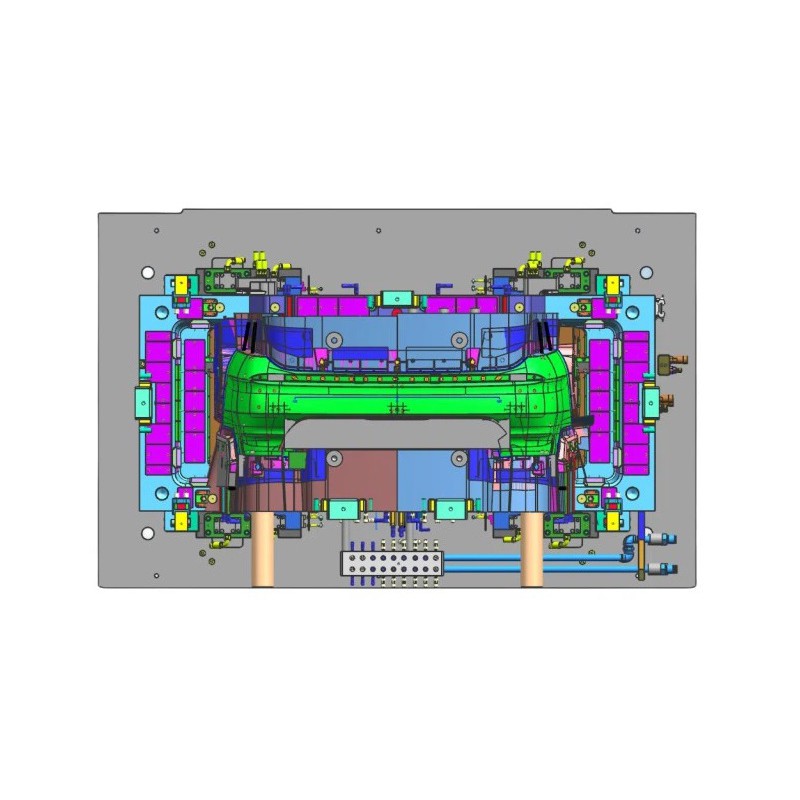

As a supplier of bumper molds, we are committed to providing our customers with molds that are not only durable but also meet the highest quality standards. If you are in the market for high - quality bumper molds or need advice on improving the durability of your existing molds, please feel free to contact us. We have a team of experts who can provide you with professional solutions tailored to your specific needs.
References
- "Tool and Die Making Handbook" by Peter W. Groover
- "Plastic Injection Molding Technology" by Rosato and Rosato
- Industry reports on automotive mold manufacturing and quality control.