

As a supplier of Grille Cover Mould, I've been in the game for quite a while. Evaluating the performance of a grille cover mould over time is super important. It helps us figure out if the mould is holding up well and if it's still making high - quality grille covers for our customers.
Initial Performance Checks
When a grille cover mould is first made, we start with some basic checks. First off, we look at the dimensional accuracy. The grille covers need to fit perfectly on the cars they're designed for. We use precision measuring tools to make sure all the dimensions of the moulded grille covers are spot - on. If there are any deviations, it could lead to problems when the grille cover is installed on the vehicle.
Another thing we check is the surface finish. A smooth surface finish is crucial for a grille cover. It not only looks good but also affects the aerodynamics of the car. We run our hands over the grille covers and use visual inspections to make sure there are no rough spots, scratches, or other surface defects.
The ejection system is also a key part of the initial performance evaluation. The grille covers need to be ejected from the mould smoothly after the injection process. If the ejection is not proper, it can damage the grille covers or the mould itself. We test the ejection system multiple times to ensure it works flawlessly.
Short - Term Performance Evaluation
In the short term, usually within the first few hundred production cycles, we pay close attention to the production rate. A good grille cover mould should be able to produce grille covers at a consistent and efficient rate. If the production rate starts to slow down, it could be a sign of problems such as clogging in the injection channels or wear and tear on the moving parts of the mould.
We also monitor the quality of the grille covers during this period. Even if the initial checks were okay, there could be small issues that start to show up after a few production runs. For example, we might notice some minor warping or shrinkage in the grille covers. These issues need to be addressed right away to avoid further problems.
The maintenance requirements in the short term are also an important aspect. We keep track of how often the mould needs to be cleaned, lubricated, or have minor repairs. A well - designed Automotive Grille Injection Mould should have minimal maintenance needs in the short term.
Medium - Term Performance Evaluation
As the mould goes through thousands of production cycles, we start to look at the wear and tear on the mould components. The core and cavity of the mould are the parts that come into direct contact with the molten plastic. Over time, they can wear down, which can affect the quality of the grille covers. We use non - destructive testing methods to check the thickness and integrity of these components.
The cooling system of the mould is also critical in the medium term. A proper cooling system helps to ensure that the grille covers cool evenly and quickly, reducing the chances of warping and shrinkage. We check the temperature distribution in the mould and make sure the cooling channels are not blocked or damaged.
The repeatability of the mould is another important factor. The grille covers produced should be as identical as possible from one production run to the next. We use statistical process control methods to monitor the variation in the dimensions and quality of the grille covers. If the variation starts to increase, it could be a sign of problems with the mould.
Long - Term Performance Evaluation
In the long term, which could be tens of thousands or even hundreds of thousands of production cycles, the durability of the mould is the main focus. We want to know if the mould can withstand the constant stress and pressure of the injection process over a long period. We look for signs of cracking, deformation, or other major damage to the mould.
The cost - effectiveness of the mould also becomes a significant factor in the long term. We calculate the cost per grille cover produced, taking into account the initial cost of the mould, the maintenance costs, and the energy consumption. A high - performing Radiator Grille Mould should have a low cost per unit over its lifespan.
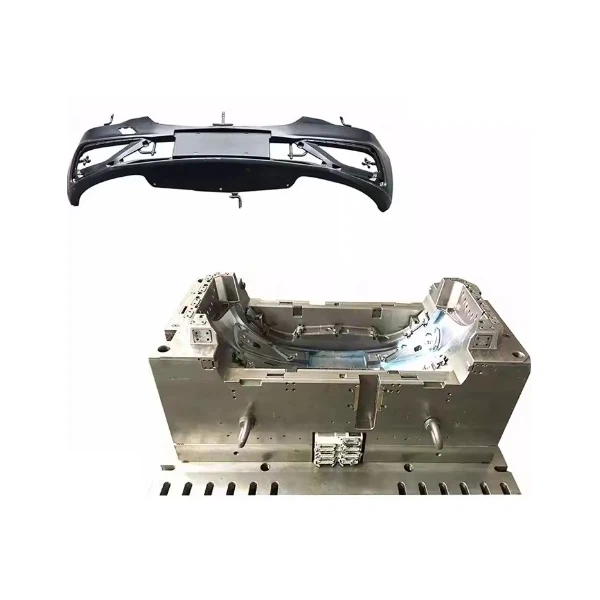
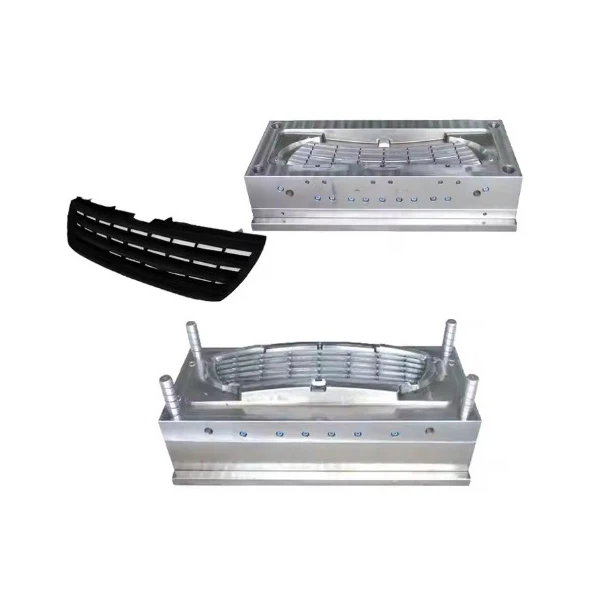
We also consider the adaptability of the mould. As the automotive industry evolves, there might be changes in the design requirements of the grille covers. A good mould should be able to be modified or adapted to meet these new requirements without too much difficulty.
Conclusion and Call to Action
Evaluating the performance of a grille cover mould over time is a complex but necessary process. It helps us ensure that we are providing our customers with high - quality moulds that can produce excellent grille covers. Whether you're a small - scale automotive parts manufacturer or a large - scale production facility, having a reliable grille cover mould is essential for your business.
If you're in the market for a grille cover mould or want to learn more about how we evaluate and improve the performance of our moulds, feel free to reach out to us. We're always happy to have a chat and discuss how we can meet your specific needs. Let's work together to take your automotive parts production to the next level.
References
- Automotive Mould Design and Manufacturing Handbook
- Injection Moulding Technology for Plastics