

Hey there! I'm a supplier of Airship Products, and I've seen firsthand how temperature can have a real impact on how these cool toys perform. In this blog, I'm gonna break down the ways temperature affects our Airship Product and why it matters to you, whether you're a parent looking for a fun gift or a retailer stocking up on inventory.
Let's start with the basics. Airship Products are designed to fly through the air, using a combination of lightweight materials and aerodynamic shapes. But just like any other object, they're affected by the environment they're in, and temperature is a big factor.
Effects of High Temperatures
When it's really hot outside, say above 90°F (32°C), a few things can happen to our Airship Product. First off, the air inside the airship expands. You know how a balloon gets bigger when you heat it up? It's the same principle here. This expansion can put extra stress on the materials of the airship. If the airship is made of a flexible material, it might stretch more than it's supposed to. Over time, this can lead to the material weakening and potentially developing small holes or tears.
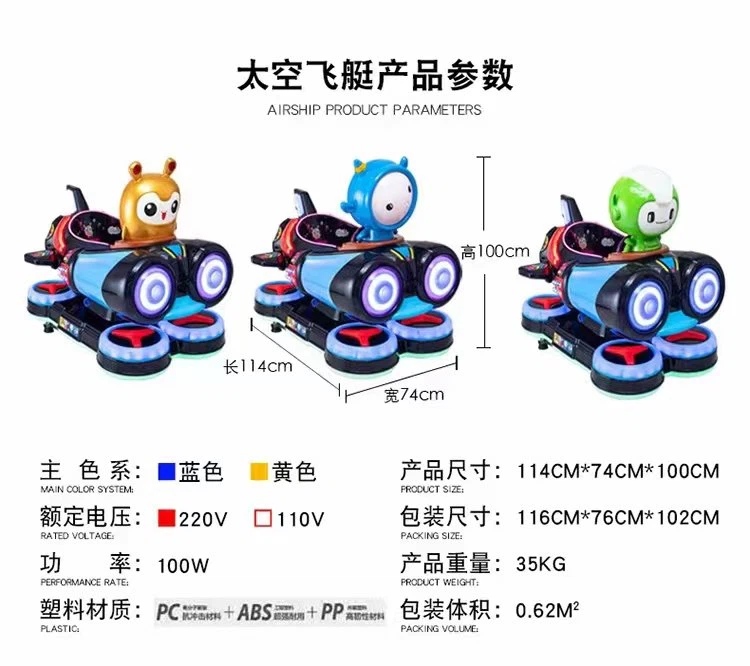

The performance of the motors in the Airship Product can also take a hit in high temperatures. Motors generate heat when they're running, and in hot weather, they have a harder time dissipating that heat. This can cause the motor to overheat, which not only reduces its efficiency but can also shorten its lifespan. You might notice that the airship doesn't fly as fast or as high as it normally does. It could even stop working altogether if the motor gets too hot.
Another issue is the battery. Batteries don't like extreme heat either. High temperatures can cause the chemical reactions inside the battery to speed up, which can lead to a faster depletion of the battery's charge. So, you'll find that your Airship Product doesn't stay in the air as long as it should on a single charge. And if the battery is exposed to high temperatures for long periods, it can permanently damage the battery, meaning you'll have to replace it sooner.
Effects of Low Temperatures
On the flip side, cold temperatures can be just as problematic. When it's below freezing, around 32°F (0°C) or lower, the air inside the airship contracts. Just like how a balloon shrinks when you put it in the freezer. This can cause the airship to lose its shape and become less aerodynamic. As a result, it won't fly as smoothly or as far.
The materials of the airship can also become more brittle in cold weather. Plastic and rubber parts can become stiff and crack more easily. If the airship hits something or even just experiences normal wear and tear, there's a higher chance of the materials breaking.
The motors and batteries also suffer in the cold. Motors need lubricants to run smoothly, and in low temperatures, these lubricants can thicken. This makes it harder for the motor to turn, reducing its power and efficiency. The battery, too, has a reduced capacity in cold weather. The chemical reactions that produce electricity slow down, so the battery doesn't hold as much charge. You might find that your Airship Product only lasts a few minutes in the air before the battery dies.
Ideal Temperature Range
So, what's the sweet spot for our Airship Product? Generally, a temperature range between 50°F (10°C) and 80°F (27°C) is ideal. In this range, the air inside the airship behaves as it should, the materials are flexible but not too soft, and the motors and batteries can operate at their best. The airship will fly smoothly, reach its maximum speed and height, and have a decent flight time on a single charge.
How to Mitigate the Effects
As a supplier, we're always looking for ways to make our Airship Product more resilient to temperature changes. We use high - quality materials that are designed to withstand a wider range of temperatures. For example, the plastic we use is more flexible in the cold and more heat - resistant in the hot.
We also recommend some simple steps for you to take. If it's hot outside, try to fly the airship in the early morning or late evening when it's cooler. And don't leave the airship in a hot car for long periods. In cold weather, keep the airship warm before you fly it. You can even use a small hand warmer to gently warm up the battery and the motors.
Other Related Products
If you're interested in other cool toys, check out our Rocking Car and Galaxy Fighter. They're also great options for kids of all ages. And of course, our Airship Product is a must - have for any toy collection.
Conclusion
Temperature plays a crucial role in the performance of our Airship Product. Whether it's high or low temperatures, they can affect the materials, the motors, and the battery. But by understanding these effects and taking some simple precautions, you can ensure that your Airship Product provides hours of fun.
If you're interested in purchasing our Airship Product or have any questions about it, don't hesitate to reach out. We're always here to help you make the most of your toy - buying experience.
References
- “Effects of Temperature on Batteries” - Battery University
- “Motor Performance in Extreme Temperatures” - Electrical Engineering Journal
- “Materials and Temperature Resistance” - Plastics and Polymers Research Institute