

Hey there! I'm a supplier of helmet moulds, and I'm super stoked to take you on a journey into how these nifty pieces of equipment work. You might be thinking, "Why should I care about how a helmet mould works?" Well, whether you're in the business of making helmets or just a curious soul, understanding the ins and outs of helmet moulds can give you a whole new appreciation for the safety gear we rely on every day.
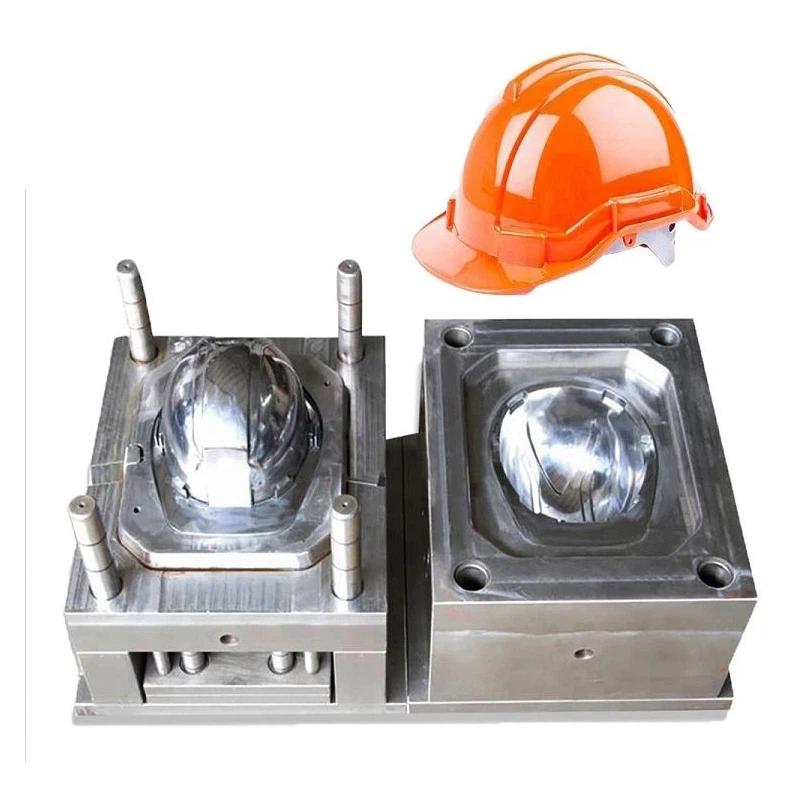
Let's start with the basics. A helmet mould is essentially a tool used to shape raw materials into the form of a helmet. It's like a blueprint for creating helmets, ensuring that each one comes out with the right shape, size, and features. There are different types of helmet moulds, depending on the kind of helmet you want to make. For example, there are Motorcycle Helmet Mould for those cool riders out there, Plastic Safety Helmet Mould for construction workers and other safety - conscious folks, and Safety Helmet Mould for a wide range of applications.
The Design Phase
Before a helmet mould can do its magic, it has to be designed. This is a crucial step because the design determines how well the helmet will fit, its aerodynamics (especially important for motorcycle helmets), and its overall functionality. Designers use advanced software to create 3D models of the helmet. They take into account factors like head shape, the position of vents for ventilation, and the placement of attachment points for straps.
Once the 3D model is ready, it's time to turn it into a physical mould. This is usually done using a process called Computer Numerical Control (CNC) machining. CNC machines are super precise. They use the 3D design as a guide and carve out the mould from a block of metal, usually steel or aluminum. The choice of metal depends on factors like the expected production volume. Steel is more durable and can withstand a high number of production cycles, making it ideal for large - scale manufacturing. Aluminum, on the other hand, is lighter and easier to machine, which can be a plus for smaller production runs.
The Moulding Process
Now, let's get into the actual moulding process. There are a few different methods, but one of the most common is injection moulding. Here's how it works:
First, the raw material, which is usually a type of plastic, is loaded into a hopper. The plastic is in the form of small pellets. From the hopper, the pellets are fed into a heated barrel. Inside the barrel, the plastic is melted down to a liquid state. This is where things start to get interesting.
The melted plastic is then injected into the helmet mould under high pressure. The pressure ensures that the plastic fills every nook and cranny of the mould, taking on its exact shape. The mould is made up of two halves, and when the plastic is injected, the two halves are clamped together tightly to prevent any leakage.
Once the plastic is inside the mould, it starts to cool and solidify. This cooling process is carefully controlled because it affects the quality of the final product. If the plastic cools too quickly, it might develop internal stresses, which can lead to cracks or a weaker helmet. If it cools too slowly, the production process becomes inefficient.
After the plastic has cooled and solidified, the mould is opened, and the newly formed helmet is ejected. But the process isn't quite over yet. The helmet might have some excess plastic, called flash, around the edges. This flash needs to be trimmed off, and the helmet might go through some additional finishing processes, like sanding or polishing, to give it a smooth and professional look.
Compression Moulding
Another method used for helmet moulding is compression moulding. This method is often used for making helmets with more complex shapes or for using materials that are better suited to compression.
In compression moulding, a pre - measured amount of raw material, which could be a thermosetting plastic or a composite material, is placed directly into the open mould. The two halves of the mould are then closed, and pressure is applied. As the pressure is applied, the material spreads out and fills the mould cavity.
Heat is also applied during this process to cure the material. Unlike injection moulding, where the plastic is melted and then cooled, in compression moulding, the material is cured through a chemical reaction caused by the heat and pressure. Once the curing process is complete, the mould is opened, and the helmet is removed.
Quality Control
Quality control is a huge part of the helmet - making process. Every helmet that comes out of the mould needs to meet strict safety standards. This means that the helmet has to be tested for things like impact resistance, penetration resistance, and retention system strength.
For impact resistance testing, a helmet is placed on a test headform and dropped from a certain height onto an anvil. The force of the impact is measured, and the helmet must meet a specific threshold to pass the test. Penetration resistance testing involves dropping a pointed object onto the helmet to see if it can penetrate the shell.

The retention system, which is the straps that hold the helmet on the head, also has to be tested. It must be strong enough to keep the helmet in place during an impact but not so tight that it causes discomfort.
Why Choose Our Helmet Moulds
As a helmet mould supplier, we take pride in offering high - quality moulds. Our moulds are designed with the latest technology, ensuring that the helmets produced are of the highest standard. We use top - notch materials for our moulds, which means they have a long lifespan and can produce a large number of helmets without losing their shape or quality.
Our team of experts is always on hand to provide support and advice. Whether you're a small - scale manufacturer just starting out or a large company looking to upgrade your production line, we can help you find the right helmet mould for your needs.
Let's Connect
If you're in the market for a helmet mould, we'd love to hear from you. Whether you have questions about the design, the moulding process, or just want to get a quote, don't hesitate to reach out. We're here to make the process of getting a helmet mould as smooth and hassle - free as possible. So, let's start a conversation and see how we can work together to bring your helmet - making dreams to life.
References
- "Plastic Injection Molding Handbook" by O. Olabisi
- "Manufacturing Engineering and Technology" by S. Kalpakjian and S. Schmid