

In the dynamic landscape of automotive and manufacturing industries, front grille moulds play a pivotal role in shaping the aesthetics and functionality of vehicles. As a front grille mould supplier, I've witnessed firsthand the profound impact that new technologies have had on our field. This blog post aims to explore how these advancements are revolutionizing front grille mould manufacturing.
1. Precision Engineering with CAD/CAM Technologies
One of the most significant technological breakthroughs in front grille mould manufacturing is the widespread adoption of Computer - Aided Design (CAD) and Computer - Aided Manufacturing (CAM) systems. CAD allows us to create highly detailed 3D models of front grilles with an unprecedented level of precision. We can simulate different design scenarios, test the structural integrity of the grille, and optimize its shape for better aerodynamics and cooling performance.
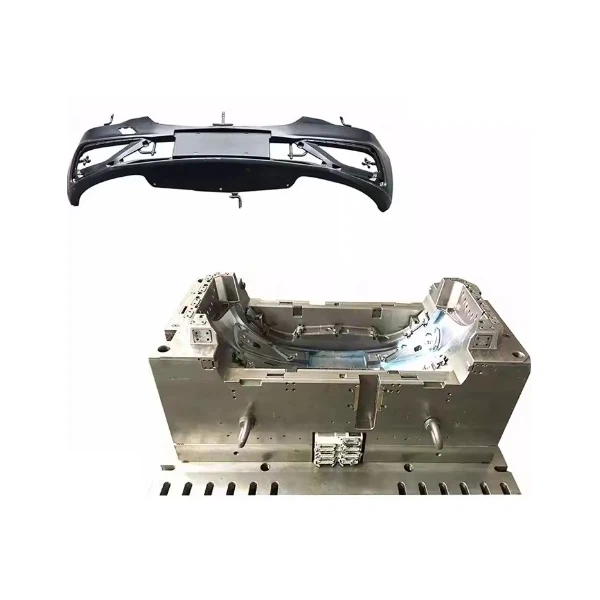

With CAD, we can easily make modifications to the design without the need for physical prototypes. This not only saves time but also reduces costs associated with traditional prototyping methods. Once the design is finalized, CAM systems take over. These systems translate the CAD models into machine - readable instructions, enabling high - precision machining of the moulds. CNC (Computer Numerical Control) machines guided by CAM can cut, drill, and mill the mould materials with extreme accuracy, ensuring that the final moulds meet the exact specifications of the design.
For instance, when manufacturing a Radiator Grille Mould, CAD/CAM technologies allow us to design and produce moulds with complex internal structures that facilitate efficient coolant flow. This results in radiators that perform better and last longer.
2. Additive Manufacturing: A Game - Changer
Additive manufacturing, commonly known as 3D printing, has emerged as a revolutionary technology in front grille mould manufacturing. Unlike traditional subtractive manufacturing methods, where material is removed from a block to create the desired shape, 3D printing builds objects layer by layer.
This technology offers several advantages. First, it enables rapid prototyping. We can quickly produce a physical prototype of a front grille mould in a matter of hours or days, depending on the complexity of the design. This allows our customers to visualize the final product early in the development process and provide feedback, which can be incorporated into the design without significant delays.
Second, 3D printing can be used to create complex geometries that are difficult or impossible to achieve with traditional manufacturing methods. For example, when manufacturing an Air Conditioner Grille Mold, we can design and print moulds with intricate lattice structures that enhance air circulation while maintaining the structural integrity of the grille.
However, 3D printing also has its limitations. The materials used in 3D printing may not always have the same mechanical properties as those used in traditional manufacturing. Additionally, the printing speed can be relatively slow for large - scale production. But as the technology continues to evolve, these limitations are gradually being overcome.
3. Advanced Materials and Coatings
New materials and coatings are also having a major impact on front grille mould manufacturing. High - performance alloys and composite materials are being used to make moulds that are more durable, resistant to wear and corrosion, and have better thermal conductivity.
For example, some of the modern mould steels have improved hardness and toughness, which allows them to withstand the high pressures and temperatures involved in the injection - molding process. This results in longer - lasting moulds that require less frequent maintenance and replacement.
In addition to new materials, advanced coatings are being applied to the surface of the moulds. These coatings can reduce friction, prevent sticking of the plastic material during the injection - molding process, and improve the surface finish of the final grille. For instance, a diamond - like carbon (DLC) coating can provide a smooth, hard surface that enhances the release of the plastic part from the mould, reducing the risk of defects. When manufacturing a Grille Cover Mould, these advanced materials and coatings ensure that the grille covers have a high - quality appearance and long - term durability.
4. Automation and Robotics
Automation and robotics are transforming front grille mould manufacturing by increasing efficiency, improving quality control, and reducing labor costs. In our manufacturing facilities, we use robotic arms for tasks such as loading and unloading raw materials, operating CNC machines, and performing quality inspections.
Robotic systems can work continuously without fatigue, ensuring consistent production quality. They can also perform tasks with a high level of precision, reducing the risk of human error. For example, when inserting inserts into the moulds, robots can place them with micron - level accuracy, which is crucial for the proper functioning of the final grille.
Automation also extends to the quality control process. We use automated inspection systems, such as 3D scanners and vision systems, to detect any defects or deviations from the design specifications in the moulds and the final grille products. These systems can quickly analyze large amounts of data and provide real - time feedback, allowing us to make adjustments to the manufacturing process immediately.
5. Digital Twin Technology
Digital twin technology is another emerging trend in front grille mould manufacturing. A digital twin is a virtual replica of a physical object or system. In our case, we create a digital twin of the front grille mould manufacturing process.
This digital twin contains all the relevant data about the mould design, manufacturing process parameters, and the performance of the final product. By analyzing the data from the digital twin, we can predict potential issues in the manufacturing process, optimize the process parameters, and improve the overall efficiency of the production.
For example, if the digital twin shows that a particular area of the mould is experiencing excessive wear during the injection - molding process, we can make adjustments to the process parameters or modify the design of the mould to prevent premature failure. This technology also allows us to simulate different scenarios and test new design concepts without the need for physical prototypes, saving time and resources.
6. Impact on the Supply Chain
The adoption of new technologies in front grille mould manufacturing has also had a significant impact on the supply chain. With the ability to produce moulds more quickly and with higher precision, we can reduce lead times for our customers. This means that automotive manufacturers can get their front grilles to the market faster, giving them a competitive edge.
Moreover, the use of digital technologies such as CAD/CAM and digital twin technology enables better communication and collaboration between different stakeholders in the supply chain. We can share design files and production data in real - time with our customers and suppliers, ensuring that everyone is on the same page throughout the manufacturing process.
Conclusion
In conclusion, new technologies are revolutionizing front grille mould manufacturing. From precision engineering with CAD/CAM to the game - changing capabilities of additive manufacturing, advanced materials and coatings, automation and robotics, and digital twin technology, these advancements are enabling us to produce higher - quality moulds more efficiently and cost - effectively.
As a front grille mould supplier, we are committed to staying at the forefront of these technological trends. We continuously invest in research and development to incorporate the latest technologies into our manufacturing processes, ensuring that we can meet the evolving needs of our customers.
If you are in the market for high - quality front grille moulds, we invite you to contact us for a detailed discussion about your requirements. Our team of experts is ready to work with you to develop customized solutions that meet your specific needs.
References
- Groover, M. P. (2010). Fundamentals of Modern Manufacturing: Materials, Processes, and Systems. John Wiley & Sons.
- Gibson, I., Rosen, D. W., & Stucker, B. (2015). Additive Manufacturing Technologies: 3D Printing, Rapid Prototyping, and Direct Digital Manufacturing. Springer.
- Kalpakjian, S., & Schmid, S. R. (2009). Manufacturing Engineering and Technology. Pearson.