

As a supplier of rear bumper moulds, I often encounter inquiries from clients regarding the reparability of damaged moulds. The answer to the question "Can a rear bumper mould be repaired if damaged?" is not a simple yes or no. It depends on several factors, including the type and extent of the damage, the material of the mould, and the manufacturing process involved.
Types of Damage and Repair Possibilities
Surface Damage
Surface damage is one of the most common issues that rear bumper moulds may face. This can include scratches, dents, or corrosion on the mould's surface. In many cases, surface damage can be repaired. For minor scratches, a simple polishing process can often restore the smoothness of the surface. More significant scratches or dents may require more advanced techniques such as machining or welding.
If the mould is made of steel, which is a common material for rear bumper moulds, welding can be an effective way to repair dents. After welding, the area can be machined and polished to match the original surface finish. However, it's important to note that welding can sometimes cause changes in the material properties, so careful consideration and proper post - welding treatment are necessary.
Cracking
Cracking is a more serious type of damage. Small cracks may be repairable, especially if they are on the surface and have not propagated deeply into the mould. One method to repair small cracks is by using specialized adhesives or fillers. These materials can be applied to the crack, and then the area can be machined and polished.
For larger cracks, especially those that run through the thickness of the mould, repair becomes more challenging. In some cases, it may be possible to cut out the cracked section and weld in a new piece of material. However, this process requires high - precision machining and welding skills to ensure that the repaired mould maintains its dimensional accuracy and structural integrity.
Wear and Tear
Over time, rear bumper moulds can experience wear and tear due to repeated use. This can lead to a loss of dimensional accuracy, which can affect the quality of the produced bumpers. In cases of mild wear, the mould can be re - machined to restore its original dimensions. For example, if the cavity of the mould has worn down, a small amount of material can be removed from the surface to create the correct shape again.
However, if the wear is severe, re - machining may not be a viable option. In such cases, the mould may need to be replaced. It's important to regularly inspect the mould for signs of wear and take preventive measures to extend its service life.

Factors Affecting Reparability
Material of the Mould
The material of the rear bumper mould plays a crucial role in its reparability. As mentioned earlier, steel is a popular choice for moulds due to its strength and durability. Steel moulds generally have better reparability compared to other materials. Aluminium moulds, on the other hand, are lighter and less expensive but may be more difficult to repair. Aluminium has a lower melting point and different material properties, which can make welding and machining more challenging.
Manufacturing Process
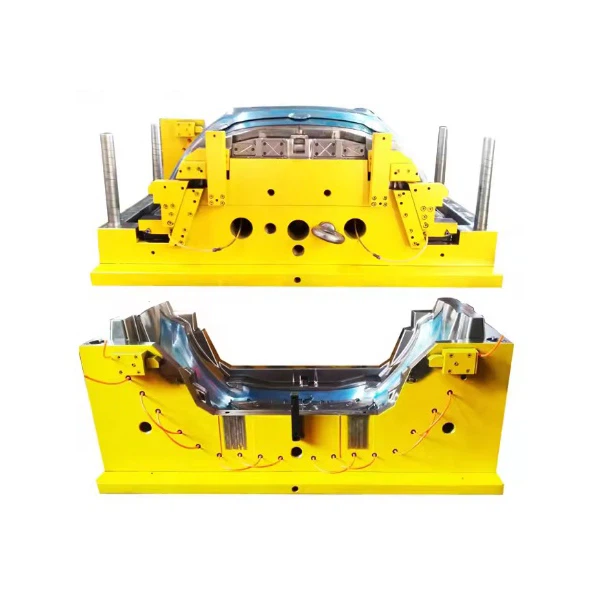
The manufacturing process used to produce the rear bumper also affects the reparability of the mould. For example, Compression Molds For Automotive and Bumper Injection Mould have different requirements and characteristics. Compression moulds are typically used for thermosetting plastics, while injection moulds are used for thermoplastics.
Injection moulds often require higher precision and more complex designs. Any damage to an injection mould can have a significant impact on the quality of the injected parts. Therefore, the repair process for injection moulds needs to be more precise and carefully controlled to ensure that the mould can continue to produce high - quality bumpers.
Cost - Benefit Analysis of Repair vs. Replacement
When deciding whether to repair or replace a damaged rear bumper mould, a cost - benefit analysis is essential. Repairing a mould can be less expensive than replacing it, especially for minor damage. However, if the damage is extensive and the repair process is complex, the cost of repair may approach or even exceed the cost of a new mould.
In addition to the direct cost, other factors such as downtime and the impact on production need to be considered. Repairing a mould may take some time, during which production may be halted. If the downtime is too long, it can result in lost revenue and customer dissatisfaction. On the other hand, replacing a mould can be a quicker solution, but it requires a larger upfront investment.
Our Expertise as a Rear Bumper Mould Supplier
As a rear bumper mould supplier, we have extensive experience in dealing with damaged moulds. Our team of experts can assess the damage and provide professional advice on whether repair or replacement is the best option. We have state - of - the - art equipment and skilled technicians who can perform high - quality repairs on various types of rear bumper moulds.
We also offer a wide range of Front Bumper Mould and rear bumper moulds for different automotive models. Our moulds are made from high - quality materials and are designed to meet the strictest quality standards. Whether you need a new mould or have a damaged one that needs repair, we can provide you with the best solution.
If you are facing issues with a damaged rear bumper mould or are interested in purchasing a new one, we encourage you to contact us for a detailed consultation. Our team is ready to assist you in making the right decision for your business.
References
- "Mould Design and Manufacturing Handbook"
- "Automotive Plastic Parts Manufacturing Technology"
- Industry reports on automotive moulding and repair