


Geometric Tolerance Standards for Precision Injection Molded Parts
Geometric tolerance standards for precision injection molded parts are important technical indicators for measuring product quality. Their development requires comprehensive consideration of multiple factors, including material properties, mold precision, and injection molding process parameters.
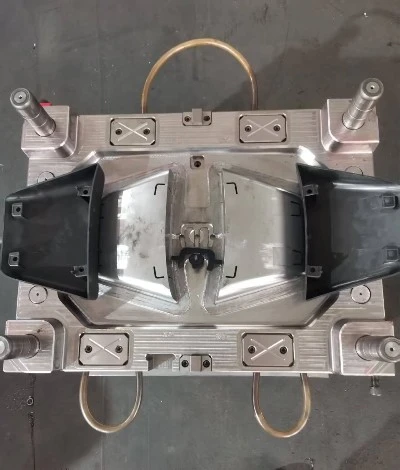
In modern manufacturing systems, these standards are like the nerve endings of precision machinery. Even the slightest deviation can trigger a "butterfly effect," leading to assembly failure or malfunction. Geometric tolerances typically encompass basic requirements such as straightness, flatness, roundness, and cylindricity, as well as complex tolerances such as position, concentricity, and symmetry.
This "micron-level" precision control requires advanced technologies such as closed-loop temperature control systems and in-mold pressure sensing. During the injection molding process, the polymer melt is shaped under a temperature field accurate to 0.1°C and an injection pressure of 2000 bar.
The surface roughness of the injection mold cavity must reach mirror-quality (Ra ≤ 0.05μm) to ensure that microscopic scratches are avoided during demolding. Modern 3D scanners can perform full-size inspection of injection molded parts with a resolution of 0.5μm, and any deformation that exceeds the tolerance will be visible.