


Principles of injection mold design for plastic shell products
Almost all products are a process from scratch. ID-MD-mold-production, first of all, there must be good ideas, product functions, and appearance. In simple terms, the product first undergoes appearance design, which is determined by the customer, followed by structural design, and then mold manufacturing and production after verification. Although all products must pursue perfection, engineers often have to succumb to reality, and product design must meet the requirements of mass production, that is, to achieve mold manufacturing. For example, a plastic mold is a tool for product molding, in which multiple inserts cooperate with the male and female molds to move with each other. Therefore, there must be enough space for movement between the inserts. In addition, since the molecular form of plastics is constantly changing from particles to solutions to mold cavities, products also need to comply with some guidelines during the design process.
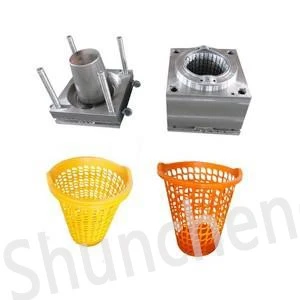
Let's take a look at the principles that should be paid attention to in the design of plastic shell products:
1). Wall thickness design principles
The wall thickness of the plastic basic design specification depends on the external force that the product needs to withstand, whether it serves as a support for other parts, the number of load-bearing columns, the number of protruding parts, and the selected plastic material. The wall thickness design of general thermoplastics should be capped at 4mm. From an economic point of view, thick products not only increase material costs, but also extend the production cycle and increase production costs. From the perspective of product design, thick products increase the possibility of pores, greatly weakening the rigidity and strength of the product.
The temperature of the mold is lower than the melting temperature of the plastic material. When the plastic material just enters the mold from the pump nozzle, due to the low mold temperature, a crystal layer of about 0.2MM will form on the mold surface, resulting in a very small space for the rubber material to pass through, requiring a very large injection pressure, and it is likely that it cannot be filled. Now some thin-wall injection molding technologies are born from this. The ideal wall thickness distribution is undoubtedly that the cross section is uniform everywhere, but it is inevitable to change the wall thickness to meet functional requirements. In this case, the transition from thick rubber to thin rubber should be as smooth as possible. Due to different cooling rates and turbulence, sudden changes in wall thickness can lead to dimensional instability and surface problems. The wall thickness and uniformity of the product will be evaluated by the plastic mold manufacturer in the early stage of mold development to ensure that the product can have a good appearance.
2). Reinforcement design principles
The role of reinforcing ribs Reinforcing ribs are an indispensable functional component of plastic parts. Reinforcement ribs can increase the rigidity and strength of products without significantly increasing the cross-sectional area of products. They are particularly suitable for some plastic products that are often subjected to pressure, torsion and bending. In addition, reinforcement ribs can also serve as internal flow channels to help fill the mold cavity, and play an important role in helping plastic flow into the branch part of the component. In principle, the design ribs are generally placed in the extension direction of the non-contact surface of the plastic product. The position of the ribs should be selected according to the direction of large stress and large offset of the product. This is also subject to some production considerations, such as cavity filling, shrinkage, demoulding, etc.
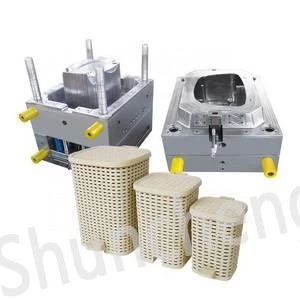
3). Column design principles
1. The wall thickness of the protruding rubber of the pillar is used to assemble products, separate objects and support other parts.
2. Hollow columns can be used to insert parts, tighten screws, etc. Plastic mold factories usually add shrinkage holes to the top of the pillar during the mold manufacturing process to prevent the top of the pillar from shrinking on the surface due to excessive wall thickness.
4). Design principles of plugs
General dimensions of inverted wishbone design
a. Stop loss is closely related to preventing loss. Used together. The function of the backstop is opposite to that of the backstop. The stopper prevents the shell B from deforming outward and the shell A from shrinking inward.
B. The inspection port is made on the outer shell of the female inspection port.
c. When designing the backstop, pay attention to the distance of 8.0MM on one side of the pin and at least 6.0MM, because the buckle will deform.
5). Buckle design principles
The design of the buckle is generally inseparable from the cantilever method; the so-called cantilever beam type actually utilizes the flexural deformation characteristics of the plastic and returns to the original shape through elastic recovery.
Advantages: The positioning buckle provides a simple, fast, low-cost and highly reliable product assembly method; it is easy to buckle and disassemble, giving full play to the designer's assembly ideas. Since the joint of the buckle is formed at the same time as the finished product is produced, it does not need to cooperate with other locking accessories such as screws and mesons during assembly, and the assembly process of the buckle is also very simple. Generally, only one insertion action is required, and no rotational movement or product positioning is required before assembly, as long as the buckle positions on both sides of the assembly are matched and buckled.
Disadvantages: The weakness of the buckle device is the two joints of the buckle. After repeated use, the hook-shaped protrusion and the flange part are easily deformed. Due to fatigue effects, the part where the bottom of the buckle is connected to the product is broken, and the broken buckle is difficult to repair. This often happens in fragile or fiber-mixed plastic materials. Because the buckle is formed at the same time as the product, the damage of the buckle is the damage of the product. The remedy is to design the buckle device to be shared by multiple buckles at the same time, so that the entire device will not fail to work due to damage to individual buckles, thereby extending its service life. Another disadvantage of the buckle device is that the tolerance requirements for buckle-related dimensions are very strict. Too many buckle positions can easily cause buckle damage. On the contrary, too few buckle positions make it difficult to control the assembly position or the joint is too loose.
Due to the above principles in the design of fruit shell plastic products, some prototypes are usually made after the product design is completed to verify the overall appearance and structure of the product. If the overall feeling is satisfactory, you can start to choose a mold manufacturer. Usually, plastic mold manufacturers will review and analyze the structure of each plastic part from the above aspects to ensure that the product meets the requirements of assembly, structure, strength and good appearance, so as to simplify the product structure as much as possible, save mold development costs, and improve injection molding production efficiency.