

PES plastic injection molding process knowledge sharing
PES plastic injection molding process, as a manufacturing technology, occupies an important position in the plastic processing industry due to its performance and wide application fields.
PES, or polyethersulfone, is a thermoplastic polymer material with excellent heat resistance, hydrolysis resistance, good electrical insulation and mechanical strength. These characteristics make PES plastic injection molding process particularly critical when manufacturing precision and high-demand products.
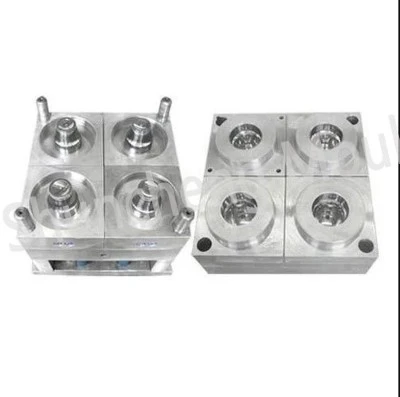
In the PES plastic injection molding process, the pretreatment of raw materials is crucial. PES particles need to be strictly dried to remove moisture from them to avoid bubbles during the injection molding process, which affects the quality and appearance of the product. Subsequently, the pretreated PES particles are melted and injected into the mold cavity under high temperature and high pressure through a precision injection molding machine.
This process requires not only precise mold design, but also strict control of injection molding temperature, pressure, time and other parameters to ensure the dimensional accuracy and surface finish of the product. After the injection molding is completed, a series of post-processing processes such as cooling, demolding, and trimming are required to further improve the performance and appearance of the product. During the cooling process, it is necessary to ensure that the product is cooled evenly to avoid deformation or cracking caused by excessive internal stress. When demolding, it is necessary to use appropriate demolding agents and demolding techniques to reduce damage to the product. PES plastic injection molding process is a manufacturing technology that integrates precision design, strict control and efficient production.