

Injection molding principle and general molding characteristics
Injection molding is to inject plastic melt into the closed mold cavity at high speed under high pressure, and obtain a plastic product that is completely consistent with the shape of the mold cavity after cooling and shaping.
Injection molding must meet two necessary molding conditions: the plastic must be injected into the injection mold cavity in a molten state, and the injected plastic melt must have sufficient pressure and flow rate to completely fill the mold cavity. Therefore, injection molding must have basic functions such as plasticizing, melt injection and pressure holding molding.
Plastic plasticizing: In the plasticizing process of injection molding, solid plastic is continuously moved forward along the screw groove direction through the conveying action of the rotating screw. After heating, compaction, shearing and mixing of the screw thread, the temperature is increased and converted into a viscous plastic melt with uniform density, viscosity and composition and stable and uniform distribution.
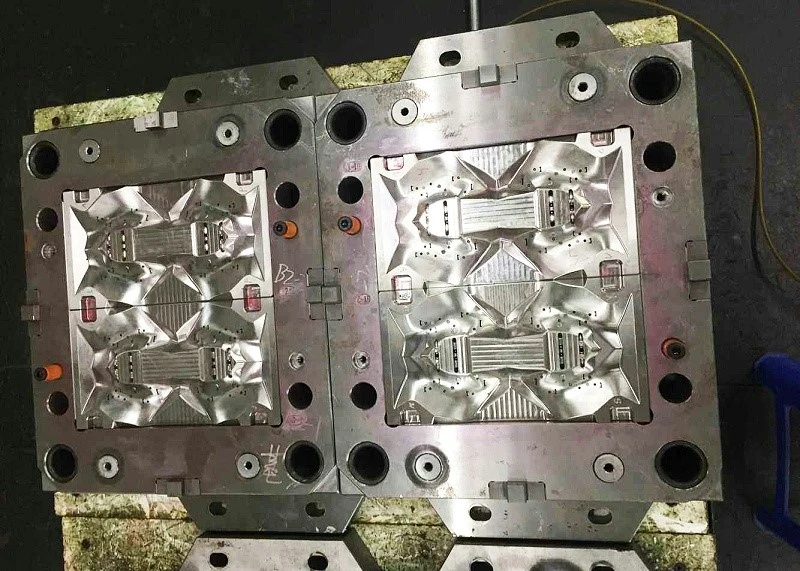
Injection molding process: the plasticized plastic melt is stored in the storage area of the barrel. During injection molding, the screw moves axially. Under the action of the screw injection pressure, the plastic melt flows through the nozzle installed in the front section of the barrel, the mold pouring system, etc. at a certain rate and is injected into the mold cavity of the mold.
Cooling and shaping process: the plastic melt injected into the mold cavity of the injection mold overcomes various flow resistances and fills the mold cavity. The plastic melt filling the mold cavity is subjected to huge pressure from the mold cavity. This pressure tends to drive the plastic melt back to the barrel. Due to the cooling effect of the mold cavity, the plastic melt cools and shrinks.
At this time, the injection molding screw continues to provide pressure to keep the plastic melt filling the cavity without reflux, and appropriately replenishes the plastic melt into the mold cavity to fill the shrinkage space in the mold cavity until the plastic melt gradually cools and solidifies into a product.

Details determine success or failure has become the standard pursued by every industry. Nowadays, the precision of products is getting higher and higher, and the quality requirements are getting stricter and stricter. This requires strict control and supervision of every link of the product during the production process, especially in the injection molding product industry.
Injection molding products have penetrated into every industry. The continuous improvement of plastic performance has made many parts that had to be made of metal before completely replaced by plastic accessories.
However, due to the good fluidity of plastics and the difficulty in controlling the size, the manufacturing process of injection molding is more difficult than other industries, especially in the details. If you don't pay attention, injection molding is prone to pores, color difference, flash and other phenomena. In severe cases, the product will be scrapped directly. These common problems in the injection molding process directly test whether the injection molding engineer has a good control over the details of the injection molding products.
The characteristics of ordinary injection molding are:
The dimensional accuracy requirements for injection molding parts are not high, and they are generally based on assembly. The appearance requirements for injection molding parts are relatively high. If necessary, secondary processing (such as oil injection) may be used to improve the appearance defects.
Ordinary injection molding does not require a particularly precise injection molding machine or specially specified materials. Generally, commonly used thermoplastics can be used for production, so ordinary injection molding technology is widely used in the modern plastic industry.
If the wall thickness of the injection molding part is uneven, it will cause the product to deform or shrink. To solve this problem, it is best to suggest that the customer modify the product first. If the product cannot be modified, then the only option is to add a C angle or R angle at the transition between thick and thin to make the transition. This will reduce the stress problem of the plastic during flow. By reducing the stress, the product will not be easily deformed. Of course, the thickness and thinness cannot exceed 60%, otherwise it must be thinned or thickened.