

What are the common faults and repair methods of charging pile plastic molds?
1) Introduction
In the field of modern energy, charging piles play a key role, and the performance of their plastic molds affects the overall quality. This article will deeply analyze the common faults and repair methods of charging pile plastic molds, explore preventive measures, and help improve production efficiency and quality.
2) Classification and analysis of common faults
1. Wear faults
Performance and impact: After long-term use, the mold core and cavity surface are worn due to plastic friction, which is manifested as smaller size and increased surface roughness, resulting in dimensional deviation and assembly accuracy of charging pile plastic parts.
Principle analysis: Involving factors such as friction coefficient, surface finish, and tolerance range. The friction coefficient affects the degree of wear speed, wear reduces the surface finish and breaks the tolerance range, making the plastic parts unable to meet the design requirements.
2. Cracking failure
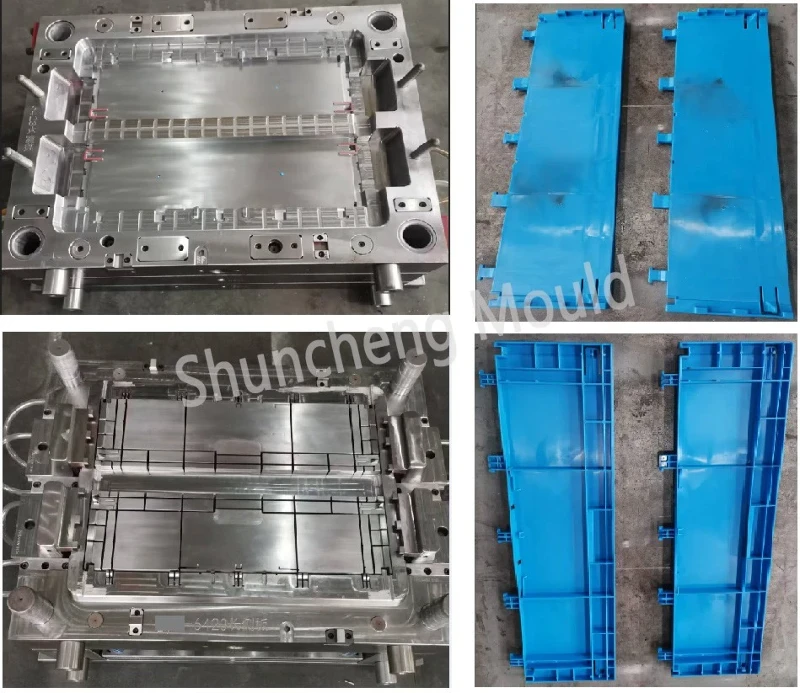
Performance and impact: Affected by the impact of mold opening and closing, cooling shrinkage stress, material defects, etc., key parts such as gates and reinforcement ribs are prone to cracking, resulting in flash and material shortage of plastic parts, affecting the integrity, functionality and safety of parts.
Principle analysis: It is related to stress concentration, thermal expansion coefficient, and fatigue strength. Unreasonable structure leads to stress concentration and cracking beyond the material's bearing limit; different materials have large differences in thermal expansion coefficients, and uneven shrinkage during cooling causes stress cracking; multiple cycles of operation reaching the fatigue strength limit will also cause cracking.
3. Deformation failure
Performance and impact: Due to uneven cooling system, unreasonable mold structure, etc., the mold is deformed as a whole or in part, which damages the shape and dimensional accuracy of plastic parts. For example, the outer shell of the charging pile is deformed and cannot be installed normally, affecting the appearance and function of the charging pile.
Principle analysis: Inconsistent cooling rate produces thermal stress, insufficient mold rigidity cannot withstand external force, and low heat conduction efficiency leads to high local temperature. These factors can all lead to deformation.
4. Stuck fault
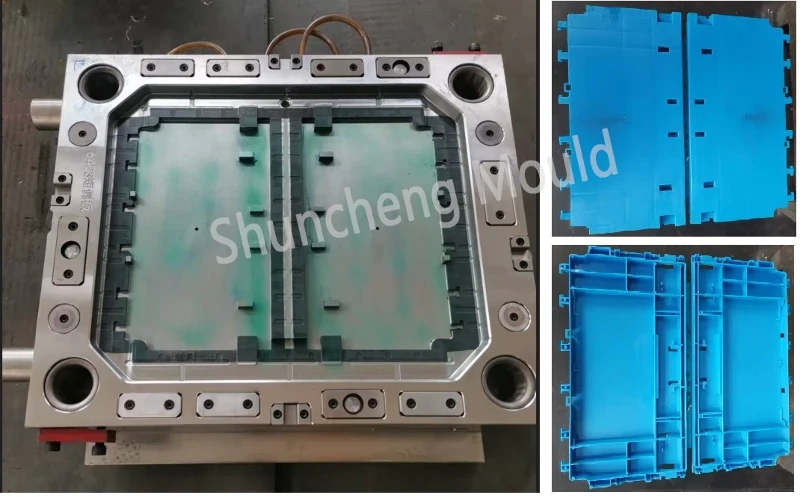
Performance and impact: In the opening and closing of molds, ejection and other actions, jamming occurs due to wear of the guide mechanism, improper matching clearance, entry of foreign matter, etc., causing plastic parts to be stretched and ejected incompletely, affecting production efficiency and increasing costs.
Principle analysis: Reduced guide accuracy (wear of the guide mechanism), improper matching tolerance, and imperfect lubrication system leading to increased friction will all cause jamming.
3) Repair methods and precautions for faults
1. Wear fault repair
1.1 Repair method
Minor wear: Use polishing, chrome plating and other surface treatments to restore size and finish.
Severe wear: Replace damaged parts or repair with laser cladding technology.
1.2 Precautions
Strictly control the repair accuracy to ensure that the dimensional tolerance and surface parameters meet the plastic molding conditions.
2. Cracking fault repair
2.1 Repair method
Small cracks: Repair with appropriate welding process.
Cracks in large areas or key parts: Replace inserts and re-adjust the mold.
2.2 Precautions
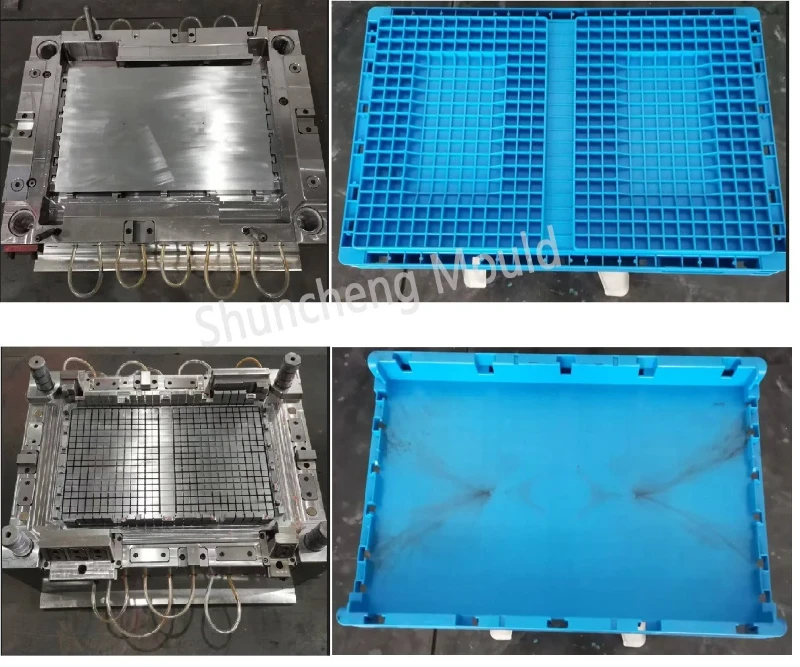
Select welding materials and parameters according to the mold material, and perform flaw detection after repair.
3. Deformation fault repair
3.1 Repair method
Cooling system problems: Check and repair cooling pipes or adjust the layout.
Mold structure problems: Local modification or overall optimization design, recalculate relevant parameters.
3.2 Precautions
Avoid damage to other parts during operation, and fully consider the requirements of plastic molding process.
4. Jam fault repair
4.1 Repair method
Guide mechanism wear: Replace guide parts and ensure installation accuracy.
Improper fit clearance: Readjust fit tolerance.
Foreign matter entry: Clean foreign matter and improve protective measures.
4.2 Precautions
Replace guide parts to lubricate, adjust tolerances to multiple times, and conduct a comprehensive inspection after cleaning to ensure effective protection.
4) Preventive measures
1. Daily maintenance: Clean residues after production, lubricate moving parts regularly, and check the wear and deformation of key parts frequently.
2. Mold optimization: reasonable layout in design, strengthening rigidity and strength; strict control of precision and material quality during manufacturing.
3. Standardized operation: control process parameters according to regulations, operate according to procedures, and prevent failures before they happen.
5) Conclusion
Charging pile plastic molds are crucial to the production of charging piles. Understanding its common faults and maintenance, and implementing preventive measures can ensure mold performance and production quality, improve efficiency, and are of great significance to promoting the development of the charging pile industry, and industry players need to pay great attention to it.