

Do you know the design of the exhaust system of plastic molds?
Injection molds are an indispensable part of injection molding. Now Dongguan Kaiyu Plastic Mold Co., Ltd. begins to introduce to you: the number of cavities, gate positions, hot runners, design principles of assembly drawings, and material selection of injection molds. Today we will continue to introduce the design of the exhaust system of plastic injection molds.
In addition to the original air in the cavity, the gas in the cavity also contains low-molecular volatile gases generated by the heating or curing of the injection molding material. It is necessary to consider the sequential discharge of these gases. Generally speaking, for molds with complex structures, it is difficult to estimate the exact position of the air lock in advance. Therefore, it is usually necessary to determine its position through trial molds and then open the exhaust groove. The exhaust groove is usually opened at the position where the cavity Z is filled.
The exhaust method is to use the mold part matching gap to open the exhaust groove for exhaust.
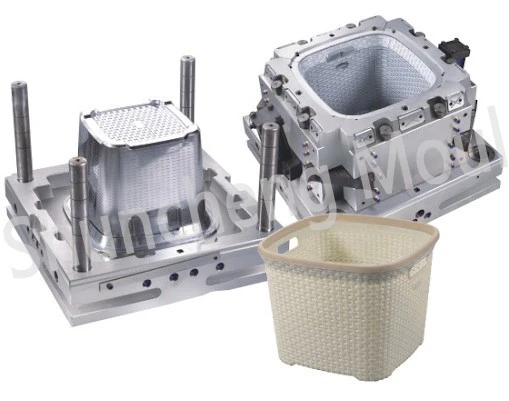
Injection molding requires exhaust, and injection demolding requires exhaust. For deep cavity shell injection molding parts, after injection molding, the gas in the cavity is blown away, and during the demolding process, a vacuum is formed between the appearance of the plastic part and the appearance of the core, which is difficult to demold. If forced to demold, the injection molded part is easily deformed or damaged. Therefore, it is necessary to introduce air, that is, introduce air between the injection molded part and the core, so that the plastic injection molded part can be demolded smoothly. At the same time, several shallow grooves are processed on the parting surface to facilitate exhaust.
1. The templates of the cavity and the core need to use conical positioning blocks or precision positioning blocks, which are installed on the four sides or around the mold.
2. The contact surface between the mold frame A plate and the reset rod needs to use flat pads or round pads to avoid damaging the A plate.

3. The perforated part of the guide rail should be inclined by more than 2 degrees to avoid burrs and burrs, and the perforated part must not be a thin blade structure.
4. To prevent dents from injection molded products, the rib width should be less than 50% of the wall thickness of the appearance surface (ideal value <40%).
5. The wall thickness of the product should be the average value, and at least mutations should be considered to avoid dents.
6. If the injection molded part is an electroplated part, the active mold also needs to be polished. The polishing requirements are second only to the mirror polishing requirements to reduce the generation of cold materials during the molding process.
7. Ribs and grooves in poorly ventilated cavities and cores must be embedded to avoid dissatisfaction and burn marks.
8. Inserts, inserts, etc. should be positioned and fixed firmly, and round pieces should have anti-rotation measures. Copper and iron sheets are not allowed to be padded under inserts. If the welding pad is high, the welding part should form a larger surface contact and be ground flat.